Walking vs. Strength Training: Which One Do You Actually Need?
Is daily walking enough to stay healthy after 50? Learn why strength training is the missing piece for muscle, bone, and metabolic health.

Fit Life 50+ Staff
Fitness and wellness resources for adults over 50
Is daily walking enough to stay healthy after 50? Learn why strength training is the missing piece for muscle, bone, and metabolic health.
Why Walking Gets So Much Credit
Walking has earned its reputation. It's accessible, low-impact, and backed by decades of research linking regular walking to reduced risk of cardiovascular disease, improved mood, better blood sugar regulation, and longer life. If you walk every day, you're doing something genuinely good for your health — full stop.

And yet, somewhere along the way, daily walking became the answer to every fitness question. Got a bad back? Walk. Want to lose weight? Walk more. Want to age well? Ten thousand steps.
Walking is a powerful foundation — but it was never meant to be the entire house. The problem isn't that people are walking. The problem is that many people believe walking alone is enough to maintain strength, protect their bones, and keep their metabolism firing as the decades pass. That's where the conversation needs to get more honest.
What Walking Can't Do For Your Body
Here's the part most fitness advice glosses over: walking is primarily a cardiovascular activity. It trains your heart and lungs, burns calories, and keeps your joints mobile. What it doesn't do — not meaningfully — is apply enough mechanical load to your muscles and bones to trigger adaptation.
Muscle preservation requires progressive resistance. As we age, muscle mass naturally declines in a process called sarcopenia. Research consistently shows that resistance training is the most effective tool for slowing or reversing this loss. Walking doesn't create the tension necessary to signal your muscles to maintain or grow.
Bone density works similarly. Bones strengthen in response to load — specifically the kind of load produced by lifting, pushing, and carrying weight against gravity. While walking is weight-bearing, the stimulus it provides simply isn't intense enough to meaningfully preserve bone mineral density in most adults over 50.
If you're relying on walking alone, you may be winning the cardiovascular battle while quietly losing the war on muscle and bone.
The Case for Strength Training After 50
Strength training isn't about vanity. It's about function — being able to carry groceries, climb stairs, recover from a stumble, and stay independent for decades to come. These outcomes are directly tied to how much lean muscle mass you carry and how structurally strong your skeleton is.
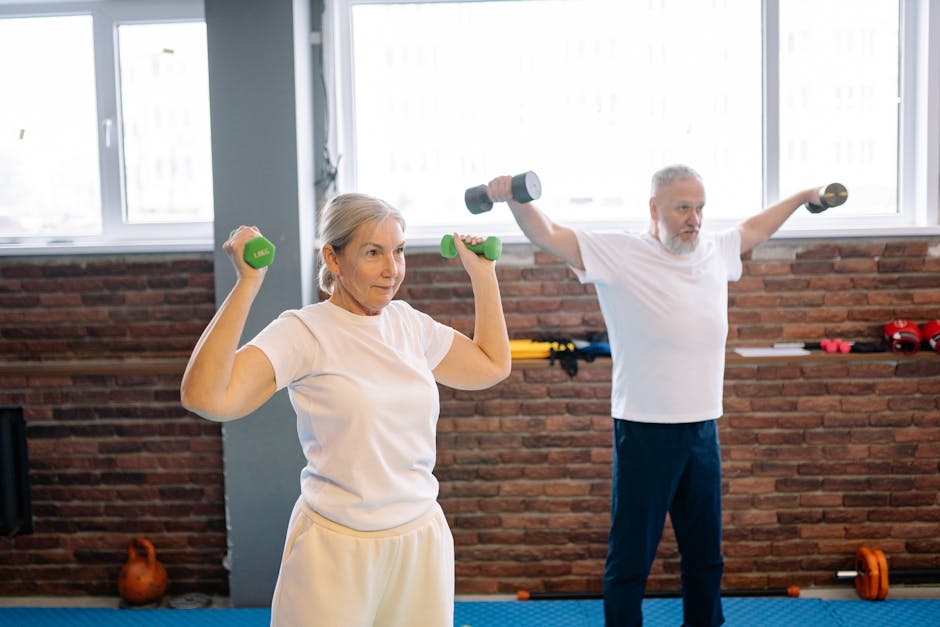
Photo by Yan Krukau on Pexels
Resistance training also delivers metabolic benefits that walking can't match. Muscle is metabolically active tissue. The more of it you have, the more efficiently your body manages blood sugar, burns fuel at rest, and responds to insulin. For anyone managing or trying to prevent type 2 diabetes, this is significant.
There's also a compelling case for injury resilience. Strong muscles support and protect joints. People with greater lower-body and core strength are less likely to fall — and better able to absorb impact if they do. That's not a minor footnote. Falls are one of the leading causes of serious injury in adults over 65, and strength is your most powerful preventive tool.
The bottom line: strength training doesn't just make you look capable. It makes you functionally capable.
The Science Behind Muscle and Bone Loss
Understanding what's happening inside your body makes the case for strength training impossible to ignore. Muscle loss typically accelerates from around age 40 onward, and without resistance training as a counterforce, the trajectory only steepens. We're not talking about subtle changes — untrained individuals can lose a meaningful percentage of muscle mass per decade, which compounds over time into significantly reduced strength and stability.
Bone remodeling follows a similar pattern. Bone is living tissue, constantly being broken down and rebuilt. When the mechanical signals that drive rebuilding — primarily load-bearing exercise — are insufficient, breakdown gradually outpaces formation. This is why osteoporosis doesn't appear overnight; it's the result of years of inadequate skeletal stimulus.
Here's what makes this encouraging rather than alarming: your body responds to resistance training at any age. Studies consistently show that adults in their 60s, 70s, and beyond can build meaningful muscle and improve bone density through progressive strength training. The adaptation window doesn't close. It just requires you to actually knock on the door.
Building a Routine That Includes Both
This isn't a competition. Walking and strength training aren't rivals — they're partners. A well-rounded fitness routine combines both, and the good news is that you don't need to spend hours in a gym to make it work.
A practical framework to start:
- Walk daily — even 20–30 minutes counts. Prioritize consistency over distance or speed.
- Strength train 2–3 times per week — full-body sessions work well and are time-efficient.
- Focus on compound movements — squats, hinges (like deadlifts or Romanian deadlifts), pressing, and rowing patterns train the most muscle in the least time.
- Apply progressive overload — gradually increase weight, reps, or difficulty over time. This is what drives adaptation.
- Prioritize form over load — always. Ego lifting is the fastest route to injury and the slowest route to results.
If you're new to strength training, bodyweight exercises are a legitimate starting point. Push-ups, goblet squats, resistance band rows, and glute bridges build real strength and teach movement patterns safely. From there, adding load is a natural progression — not a requirement to begin.
What 'Enough' Actually Looks Like
The current physical activity guidelines from major health organizations generally recommend at least 150 minutes of moderate aerobic activity per week and two or more days of muscle-strengthening activity. That word — and — is doing a lot of work. Both are considered essential, not optional add-ons to each other.
So if you're walking every day and skipping the weights, you're meeting half the standard. That half matters enormously — but it's still half.
'Enough' looks like this: you're moving aerobically most days, you're challenging your muscles with resistance at least twice a week, you're sleeping adequately, and you're eating enough protein to support muscle tissue. None of these are extreme demands. They're the baseline investment required to remain strong and functional well into your later decades.
The goal isn't perfection. It's consistency with a complete strategy. Walking is a great habit. Strength training is the non-negotiable complement that makes that habit mean more. Together, they're the combination that actually keeps you healthy — not just now, but long-term.
Conclusion
Walking every day is a genuinely healthy habit — don't stop. But if you're serious about preserving muscle, protecting your bones, and keeping your metabolism working in your favor, strength training isn't optional. It's the piece most people are missing. Start with two sessions per week. Pick three or four basic compound movements. Focus on form, apply progressive overload, and be consistent. Your future self isn't asking you to become an athlete. They're asking you to show up with a complete plan. Strong today, strong tomorrow, strong for life.
Take the Next Step
Put the Knowledge
Into Action
Send a question or use the starter resources to plan your next practical step.