Slow Lowering for Faster Muscle Growth: The Eccentric Secret
Learn why controlling the lowering phase of every rep builds more muscle and strength—and how to apply eccentric tempo training in your workouts.

Fit Life 50+ Staff
Fitness and wellness resources for adults over 50
Learn why controlling the lowering phase of every rep builds more muscle and strength—and how to apply eccentric tempo training in your workouts.
Why the Lowering Phase Is Where Growth Happens
Most people treat the lowering portion of a rep as dead time—a reset between the "real" efforts. That's one of the most costly mistakes in strength training, regardless of your age or experience level.
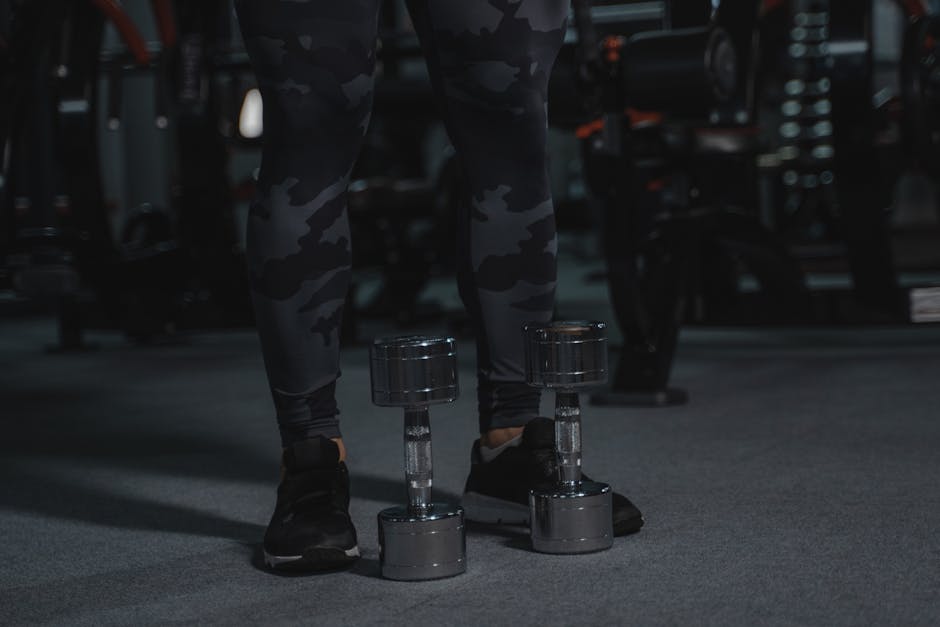
Photo by Tima Miroshnichenko on Pexels
Here's the reality: your muscles are actually stronger during the eccentric (lowering) phase than during the lifting phase. That means when you let gravity do the work and drop the weight fast, you're leaving your most powerful growth stimulus on the table.
Research consistently shows that eccentric loading creates greater mechanical tension on muscle fibers than concentric (lifting) contractions. Mechanical tension is one of the primary drivers of muscle protein synthesis—the biological process that builds new muscle tissue. More controlled tension during the lowering phase means more microscopic damage to muscle fibers, which triggers a stronger repair and growth response.
This isn't a fringe theory. It's foundational exercise science that elite coaches and physical therapists have applied for decades. The good news? You don't need a specialized gym or fancy equipment to put it to work immediately.
Fast Reps vs. Slow Negatives: What the Difference Feels Like
Picture a standard dumbbell curl. Most people swing the weight up and let it fall back down in one fluid, fast motion—total rep time: about one second. Now imagine taking three full seconds just to lower that same dumbbell back to the starting position. Same weight. Completely different stimulus.
The slower lowering phase does several things simultaneously:
- Increases time under tension (TUT) — your muscle stays loaded longer, amplifying the growth signal
- Eliminates momentum — you can't cheat a slow negative; the muscle has to do the work
- Improves motor control — you develop a stronger mind-muscle connection over time
- Reduces injury risk — controlled movement protects joints and connective tissue
Fast, sloppy reps let momentum carry the load. Slow negatives force honest effort from the muscle you're actually trying to train. For anyone who's ever wondered why their arms aren't growing despite doing endless curls, this is often the missing variable.
The goal isn't to go so slow that a set takes five minutes. A 3-second eccentric is a practical, evidence-informed target that transforms ordinary exercises into high-quality muscle-building stimulus.
Understanding Tempo Notation (And How to Use It)
If you've ever seen a training program that lists something like "3-1-2-0" next to an exercise and had zero idea what it meant—you're not alone. Tempo notation looks cryptic, but it's actually simple once you know the format.

Photo by Tima Miroshnichenko on Pexels
The four numbers represent seconds for each phase of a rep, in this order:
- Eccentric (lowering)
- Pause at the bottom
- Concentric (lifting)
- Pause at the top
So "3-1-2-0" means: lower for 3 seconds, pause 1 second at the bottom, lift for 2 seconds, no pause at the top.
For building muscle with eccentric focus, a tempo of 3-0-1-0 or 4-1-2-0 works extremely well across most exercises—squats, presses, rows, curls, and hinge movements alike.
Start by picking just one exercise per session to apply deliberate tempo. A simple squat becomes a completely different challenge when you spend three seconds descending. You'll likely need to reduce the weight you're using by 10–20%, and that's perfectly correct. Form over load—always. The muscle doesn't care about the number on the plate; it responds to tension, control, and effort.
A Complete Workout Structure Using Eccentric Tempo
Here's how to build a practical session around controlled negatives without overhauling everything you're currently doing. This framework works whether you're training two days a week or five.
Warm-Up (5–10 minutes) Light cardio and dynamic mobility. Get blood moving and joints prepared. Do NOT skip this.
Primary Compound Movements (2–3 exercises, 3–4 sets each) Apply your target tempo here. Examples:
- Squat — 4-1-2-0 tempo
- Dumbbell Row — 3-0-2-0 tempo
- Push-Up or Bench Press — 3-1-2-0 tempo
Rest 90–120 seconds between sets. This is your primary growth stimulus block.
Secondary Accessory Work (2–3 exercises, 2–3 sets each) Use a moderate eccentric (2–3 seconds) with normal concentric. Focus on weaker muscle groups.
Finisher or Core Work (optional) Bodyweight or low-load movements. Tempo matters less here.
Cool-Down (5 minutes) Static stretching, breathing, and intentional recovery.
A word on breathing: exhale during the effort (concentric lift), inhale during the lowering phase. Controlled breathing reinforces controlled movement and helps you maintain intra-abdominal pressure for joint stability. Don't hold your breath through slow negatives—breathe through them.
Modifications by level:
- Beginner: Start with 2-second eccentrics on bodyweight exercises only
- Intermediate: 3-second eccentrics on compound lifts with moderate weight
- Advanced: 4–5 second eccentrics with additional load on select movements
The Soreness Warning (and Why It's Worth It)
Fair warning: if you've never trained with deliberate slow negatives, your first session will likely leave you sore in a way that surprises you. That soreness—technically called delayed onset muscle soreness (DOMS)—is heavily associated with eccentric training.
This happens because the slow lowering phase causes more microscopic muscle fiber disruption than standard training. Your body repairs those fibers thicker and stronger over time. The soreness is feedback, not damage. It typically peaks 24–72 hours after a session and fades as your body adapts.
Here's how to manage it intelligently:
- Start conservatively. Use lighter loads than you think you need for your first two eccentric-focused sessions.
- Don't train the same muscle group while it's severely sore. Let the repair process complete.
- Prioritize sleep and protein intake. Muscle is built during recovery, not during the workout itself.
- Gradually increase eccentric time over several weeks. Progressive overload applies to tempo, not just weight.
Within two to three weeks, your body adapts significantly—the soreness decreases, your control improves, and the strength gains become very apparent. This is the long game, and it pays off. Strong today, strong tomorrow, strong for life.
Conclusion
Eccentric tempo training isn't a secret trick or a trending hack—it's a return to fundamentals. By owning the lowering phase of every rep, you transform ordinary exercises into powerful muscle-building stimulus while simultaneously protecting your joints and building movement quality that lasts. Your one actionable takeaway: pick one exercise in your next session—a squat, a row, a curl—and lower the weight for a deliberate three seconds. Just one exercise. Notice the difference. Then build from there. That's how lasting strength is built: one controlled rep at a time.
Take the Next Step
Put the Knowledge
Into Action
Send a question or use the starter resources to plan your next practical step.