Progressive Overload Without Adding Weight: The Rep Quality Secret
Think progressive overload means lifting heavier? Think again. Rep quality, tempo, and form refinement are powerful — and overlooked — drivers of muscle growth.
Fit Life 50+ Staff
Fitness and wellness resources for adults over 50
Think progressive overload means lifting heavier? Think again. Rep quality, tempo, and form refinement are powerful — and overlooked — drivers of muscle growth.
Why Most Lifters Have Progressive Overload All Wrong
Ask ten people what progressive overload means and nine of them will say the same thing: add more weight to the bar. It's the most visible form of progression, so it gets all the attention. But it's only one tool in a much larger toolbox — and for many lifters, it's not even the right tool to reach for next.
Progressive overload simply means giving your muscles a reason to adapt. Your body responds to increased demand, not increased weight specifically. When you increase the challenge your muscles face — through any means — adaptation follows. That's the whole mechanism.
The obsession with load is understandable. Heavier numbers feel like obvious proof of progress. But this narrow definition causes real problems: ego lifting, compromised form, stalled gains, and unnecessary injury risk. Worse, it leaves enormous growth potential sitting on the table, untouched.
Understanding the full picture of progressive overload doesn't just protect you — it accelerates your results. And it opens a door that never closes, regardless of your training age, equipment access, or where you are in your fitness journey.
The Real Drivers of Muscle Growth (Beyond the Weight)
Muscle growth — hypertrophy — is driven by three core mechanisms: mechanical tension, metabolic stress, and muscle damage. Adding weight primarily targets mechanical tension, but all three can be manipulated without ever touching the weight selector.

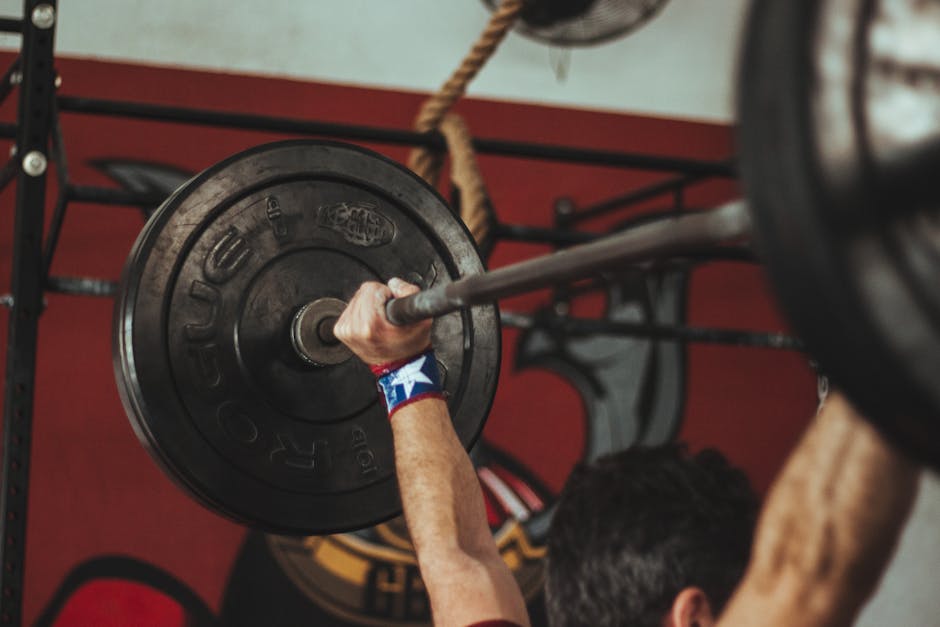
Photo by BİLAL KARADAĞ on Pexels
Here's what the science actually supports as valid progressive overload variables:
- More reps at the same weight — classic volume progression
- Slower, controlled tempo — increases time under tension dramatically
- Improved range of motion — deeper, fuller reps recruit more muscle fiber
- Reduced rest periods — increases metabolic demand on the same workload
- Better mind-muscle connection — research consistently links it to greater muscle activation
- Paused or isometric holds — eliminate momentum and force the muscle to do real work
- Improved form and technique — allows the target muscle to bear the load, not compensating joints
Every item on that list represents a legitimate increase in demand placed on your muscles. Your body doesn't know the difference between a heavier weight lifted sloppily and a lighter weight lifted with complete, deliberate control. It only knows the tension it felt — and for how long.
Tempo Training: The Underrated Tool in Your Arsenal
Tempo is arguably the most underused lever in strength training. Most lifters treat every rep the same way: pick it up, put it down, repeat. But how you move through a rep changes everything about the stimulus your muscle receives.
Tempo is typically written as a four-number sequence — for example, 3-1-2-0 — representing the eccentric (lowering), pause at the bottom, concentric (lifting), and pause at the top, all measured in seconds. A bicep curl performed with a 3-second lower, 1-second pause at the bottom, and 2-second lift creates a fundamentally different experience than the same curl done in one fluid second.
Slowing down the eccentric phase in particular is where significant gains hide. The lowering portion of any lift generates more muscle damage and tension than the lifting phase. Yet most people rush through it entirely.
You don't need to train slowly forever. But deliberately experimenting with tempo — especially on compound movements like squats, rows, and presses — can resurrect a stalled plateau without adding a single pound. Try a tempo week: keep your current weight, cut your reps slightly, and slow every rep down to a deliberate 3-second lower. Your muscles will remind you they have more work to do.
Form Refinement Is Literally Getting Stronger
Here's a reframe that changes everything: improving your form isn't a step toward progression — it is progression.

Photo by Ardit Mbrati on Pexels
When you first learn a movement, your nervous system is scrambling. Stabilizers are compensating, target muscles are only partially firing, and momentum is quietly doing work that your muscles should be doing. As technique improves, more of the load transfers to the intended muscle. The exercise becomes harder, even with the same weight.
A squat where your chest stays tall, depth is full, and your glutes are actively driving the ascent is a fundamentally more demanding squat than one where you pitched forward and bounced out of the hole. Same bar, same plates — different stimulus entirely.
This is why experienced coaches often prescribe less weight when correcting form. It's not a step backward. It's redirecting the challenge to where it belongs.
Practically, this means film yourself. Watch for where your body cheats — where momentum takes over, where range collapses under fatigue. Each correction you make is a measurable increase in the quality of work your target muscles perform. That's progressive overload. And it compounds just like the weight on the bar does.
How to Apply This: A Practical Progression Framework
Knowing these tools exist is step one. Using them strategically is step two. Here's a simple framework for layering non-weight progression into your training before automatically reaching for more load.
Before adding weight, ask yourself:
- Can I complete all prescribed reps with full, controlled range of motion?
- Am I genuinely feeling the target muscle working — or are other muscles compensating?
- Have I tried slowing the eccentric phase to 3+ seconds?
- Am I maintaining proper breathing — exhale on exertion, inhale on the lowering phase?
- Could I add one more rep while keeping perfect form?
If the answer to any of these is no or not yet, you have room to progress without adding weight.
A sample progression ladder for any exercise:
- Week 1-2: Same weight, focus on tempo (3-1-2-0)
- Week 3: Add 1-2 reps with maintained tempo
- Week 4: Tighten form, add a pause at peak contraction
- Week 5: If all boxes check, then consider a small weight increase
This approach doesn't slow your progress. It ensures that when you do add weight, your body is actually ready for it — and the gains are real, not borrowed from your joints.
The Long Game: Why This Approach Wins Every Time
There's a reason elite coaches and experienced lifters talk about quality reps more than they talk about maximum weight. It's not modesty — it's strategy. Training is a long game, and the people who stay in it longest are the ones who progress intelligently, not just aggressively.
Rep quality and form refinement build something that heavy-at-any-cost training often erodes: sustainable strength. The kind that shows up year after year because your joints, tendons, and connective tissue have been treated as partners in the process, not obstacles to work around.
For anyone who's ever hit a wall — where adding weight stopped working, where motivation dropped because progress felt invisible — this is your reminder that progress was never just the number on the plate. It's the quality of every rep you've ever done.
Strong Today... Strong Tomorrow... Strong for Life isn't just a tagline. It's a training philosophy. And it's built one quality rep at a time.
You don't need to lift more to get more from your training. You need to lift better. Start there, and the weight will follow when it's earned.
Conclusion
Progressive overload is not a synonym for 'add weight.' It's a commitment to consistently increasing the demand you place on your muscles — and that demand comes in many forms. Your next rep is an opportunity to go deeper, slower, more deliberately, or with better technique than the last one. Pick one variable this week — tempo, range of motion, or form refinement — and apply it intentionally to every set. That single shift in mindset is what separates lifters who plateau from lifters who keep building, year after year. Progress is always available. Sometimes you just have to look past the weight.
Take the Next Step
Put the Knowledge
Into Action
Send a question or use the starter resources to plan your next practical step.