Mind-Muscle Connection: The Skill That Multiplies Your Gains
Mind-muscle connection isn't just a feeling — it's a trainable neurological skill. Learn the science and how to measure and build it for real strength gains.
Fit Life 50+ Staff
Fitness and wellness resources for adults over 50
Mind-muscle connection isn't just a feeling — it's a trainable neurological skill. Learn the science and how to measure and build it for real strength gains.
The Internet Got This Wrong
Scroll through enough fitness content and you'll find mind-muscle connection reduced to something like: "just really feel the muscle working, bro." It sounds mystical. It sounds unverifiable. And honestly, it sounds like something you either have or you don't.
That's the myth — and it's costing people real gains.
Mind-muscle connection isn't a vibe. It isn't a personality trait reserved for elite bodybuilders. It is a trainable neurological skill with measurable effects on muscle activation, strength output, and long-term development. Research using electromyography (EMG) — the technology that measures electrical activity in muscles — has consistently shown that focused intentional attention on a target muscle during exercise increases that muscle's activation compared to simply moving the weight from point A to point B.
That's not a feeling. That's a measurable, repeatable, trainable result. And the moment you start treating it that way, your training changes permanently.
What's Actually Happening in Your Nervous System
Every rep you perform starts in your brain, not your muscle. Your motor cortex fires a signal, that signal travels down your spinal cord through motor neurons, and those neurons recruit muscle fibers to produce force. The muscle doesn't decide how hard to contract — your nervous system does.
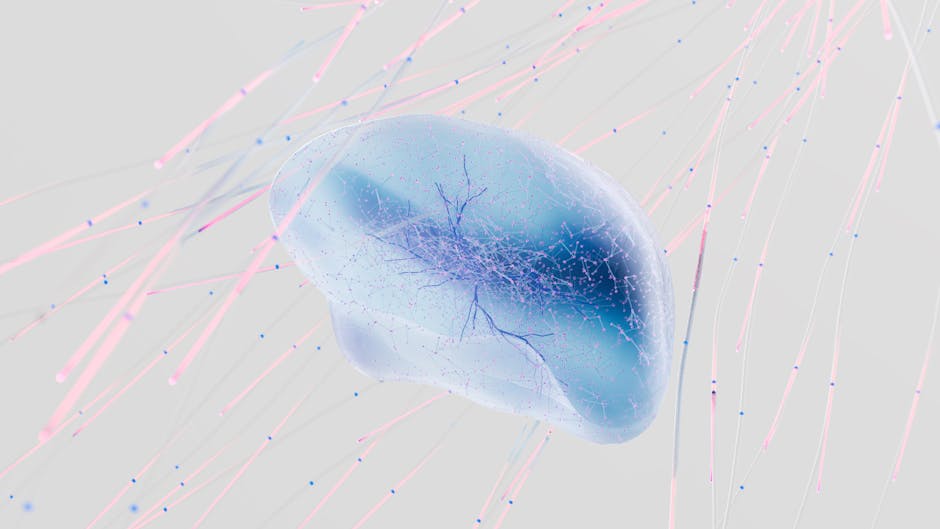
Photo by Google DeepMind on Pexels
This is where mind-muscle connection lives: in the quality and specificity of that neural signal.
When you train without deliberate focus, your nervous system takes the path of least resistance. It recruits whatever combination of muscles gets the job done — which often means dominant muscle groups compensate for weaker ones. That's why people bench press and feel it mostly in their shoulders. That's why they do rows and their biceps take over before the lats ever engage.
Intentional focus — actively directing your attention to the target muscle — has been shown to change which motor units get recruited and how many fire during a given movement. More motor unit recruitment means more muscle fiber activation. More fiber activation means more stimulus for adaptation. More adaptation means more strength and muscle over time.
This is the chain. And it starts entirely between your ears.
The Measurable Mechanics: How to Know It's Working
Here's where most people get stuck: they understand the concept but have no way to verify whether they're actually doing it. So let's make this concrete.
The Touch Test. Before a set, physically place your hand on the target muscle. During the rep, try to push your muscle into your hand. This tactile cue dramatically improves activation for most people, particularly in muscles like the glutes, lats, and mid-back that are notoriously hard to feel.
The Slow Eccentric Test. Take the lowering phase of any exercise to 3–4 seconds. If the target muscle is truly engaged, you'll feel tension throughout the entire range. If you feel nothing — or feel it in the wrong place — your nervous system is compensating. Now you have data.
The Isolation Warm-Up. Before compound lifts, do one light isolation movement for the target muscle. Before squats, do a set of slow bodyweight glute bridges. Before rows, do a band pull-apart. This "wakes up" the neural pathway to that muscle before it needs to perform under load.
None of these require equipment. All of them give you immediate, actionable feedback on whether your mind-muscle connection is active or absent.
How to Train It Like the Skill It Is
Skills are built through deliberate practice — not repetition alone, but intentional repetition with feedback and progressive challenge. Mind-muscle connection follows the same rules.

Photo by Jordan Bergendahl on Pexels
Start light. You cannot focus on muscle activation while you're grinding through a max-effort lift. Neural focus requires available cognitive bandwidth, which disappears under maximal load. Use 50–70% of your working weight for mind-muscle connection practice sets and treat them as skill work, not warm-ups.
Use internal cues, not external ones. External cues focus on movement outcomes ("push the floor away"). Internal cues focus on the muscle itself ("squeeze your glutes at the top"). For hypertrophy and activation quality, internal cues consistently outperform external ones in the research.
Eliminate distractions during working sets. This isn't about being anti-social. It's about the fact that divided attention produces divided results. Between sets, talk, scroll, laugh. During sets, your attention has one job.
Log it. After each set, rate your connection on a simple 1–3 scale. Over weeks, you'll see patterns — which muscles you connect to easily, which ones remain ghosted. That awareness is itself a training adaptation.
Why This Matters More as Your Training Age Increases
Here's something worth understanding whether you're 25 or 65: the longer you've been training, the more your body has built ingrained compensation patterns. A decade of benching with dominant front delts doesn't fix itself when you decide to "focus on your chest." The neural groove is deep.
This is one reason experienced lifters often hit plateaus that more volume and heavier weight can't solve. The limiting factor isn't muscular capacity — it's neural specificity. The target muscle isn't receiving the signal it needs to grow.
For anyone coming back to training after a break, rehabbing an injury, or building strength after 40 or 50, mind-muscle connection training isn't optional — it's the foundation. Muscle that has been under-recruited for years requires deliberate re-activation before it can respond to progressive overload.
And here's the empowering flip side: this is entirely coachable. Regardless of your age, training history, or current fitness level, your nervous system retains its capacity to learn new recruitment patterns. Neuroplasticity doesn't have an expiration date. The skill is available to you right now — it just requires intentional practice, not more weight on the bar.
A Practical Protocol to Start This Week
You don't need a new program. You need a new layer of intentionality inside your existing one. Here's how to add it immediately.
Pick one muscle group per week to prioritize. Don't try to overhaul everything at once. Choose the muscle you most struggle to feel — for most people it's lats, glutes, or mid-back — and make connection quality the goal for every exercise involving that muscle this week.
Add one activation drill before each session. Two sets of 10 reps, light weight, slow tempo, hand on the muscle. This is your neural warm-up.
During your main working sets: reduce load by 20%, take a 2-second pause at peak contraction, and use an internal cue — squeeze, drive, pull with the muscle, not the joint.
At the end of each session, write one sentence: "Today I felt [muscle] during [exercise] — yes or no, and why." That sentence builds the awareness that eventually becomes automatic.
Within two to three weeks of consistent practice, most people report noticing target muscles activating in exercises where they previously felt nothing. That's not a coincidence. That's a trained skill producing a measurable result.
Conclusion
Mind-muscle connection is not a mystical gift that elite athletes are born with. It is a neurological skill — learnable, trainable, and measurable — and treating it that way is one of the highest-leverage changes you can make to your training right now. Your single actionable takeaway: this week, pick one exercise, reduce the load by 20%, place your hand on the target muscle for your first set, and focus entirely on making that muscle do the work. One exercise. One week. Notice what changes. That's how skills are built — and that's how gains compound. Strong Today. Strong Tomorrow. Strong for Life.
Take the Next Step
Put the Knowledge
Into Action
Send a question or use the starter resources to plan your next practical step.