Lifting But Not Growing? Protein Is the Missing Piece
Still not seeing muscle gains despite consistent training? Discover the exact protein targets and timing strategies that break plateaus for 50+ lifters.

Fit Life 50+ Staff
Fitness and wellness resources for adults over 50
Still not seeing muscle gains despite consistent training? Discover the exact protein targets and timing strategies that break plateaus for 50+ lifters.
Why Your Muscles Are Leaving Gains on the Table
You're showing up. You're putting in the work. The weights are moving, the sweat is real — but the mirror isn't changing. Before you blame your program or your genetics, take a hard look at your plate.
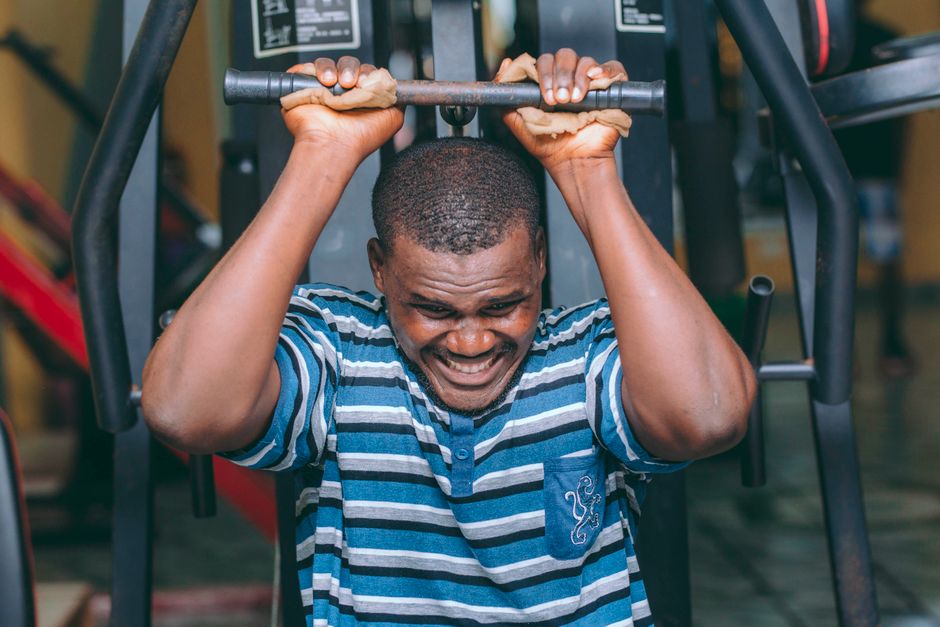
Photo by Zeal Creative Studios on Pexels
Muscle growth is a two-part equation: the training stimulus and the raw material to rebuild. Skip either one and you stall. Most frustrated lifters have the training dialed in but are chronically under-fueling the recovery side of that equation — specifically protein.
Here's what makes this especially relevant if you're in the 50+ camp: research consistently shows that as we age, the body becomes less efficient at triggering muscle protein synthesis from the same protein dose that worked at 25. This phenomenon — sometimes called anabolic resistance — means your protein needs actually go up with age, not down. Eating the same modest amount you always have isn't a maintenance strategy anymore. It's a plateau guarantee.
The Protein Threshold Most 50+ Lifters Miss
The old "0.8 grams per kilogram of bodyweight" recommendation was built around preventing deficiency — not building muscle. For active lifters, that number is simply too low.
Current sports nutrition guidance for strength-training adults generally lands in the range of 1.6 to 2.2 grams of protein per kilogram of bodyweight per day (roughly 0.7–1.0g per pound). For a 180-pound lifter, that's 126–180 grams of protein daily. Many people eating "pretty well" are hitting half that.
For lifters over 50, emerging evidence leans toward the higher end of that range. Because of anabolic resistance, you may need a larger protein dose to trigger the same muscle-building response a younger person gets from less. This isn't a disadvantage — it's just information. Once you know the target, hitting it is entirely within your control.
Do the math on your current intake honestly. Use a food tracking app for one week. The number you see might be the exact explanation you've been looking for.
Timing: The Multiplier Nobody Talks About Enough
Total daily protein matters most — but when you eat it is the strategy that separates good results from great ones.

Photo by Pervane Mustafa27 on Pexels
Your muscles are primed to absorb and use protein most effectively in the window surrounding your training session. Consuming a quality protein source within 30–60 minutes post-workout helps maximize muscle protein synthesis when your body is most receptive. Think Greek yogurt with fruit, a protein shake with milk, eggs on whole grain toast — real food works just as well as supplements.
Beyond the post-workout window, protein distribution throughout the day matters significantly. Eating 150 grams of protein in one or two sittings isn't nearly as effective as spreading it across four or five meals or snacks. Research points to roughly 30–40 grams per meal as an effective dose for triggering muscle protein synthesis — especially for older adults who may need that larger per-meal dose to overcome anabolic resistance.
This is the difference between eating protein and eating protein strategically. Same total number, dramatically different results.
Protein Quality: Not All Sources Are Created Equal
Grams are not just grams. The type of protein you eat influences how effectively your body uses it to build and repair muscle tissue.
Complete proteins — those containing all nine essential amino acids — are your highest-value options. These include eggs, chicken, fish, beef, dairy, and for plant-based eaters, soy and quinoa. The amino acid leucine in particular acts as a key trigger for muscle protein synthesis, and animal proteins tend to deliver it in higher concentrations.
If you eat mostly plant-based, you can absolutely hit your targets — you just need to be more intentional. Combining protein sources throughout the day (legumes, grains, nuts, seeds, tofu, tempeh) and potentially leaning on a quality pea or soy protein supplement can fill the gaps.
One often-overlooked source for 50+ lifters: dairy. Cottage cheese, Greek yogurt, and milk are rich in leucine and casein — a slower-digesting protein that makes them ideal before bed, keeping muscle protein synthesis elevated overnight when recovery is happening at its deepest.
Building Your Practical Protein Blueprint
Strategy without a plan is just good intentions. Here's how to close the gap between where you are and where your protein intake needs to be.
Step 1 — Know your target. Multiply your bodyweight in pounds by 0.7 to get your minimum daily protein goal. Aim higher (up to 1.0g/lb) if you're training hard or in a calorie deficit.
Step 2 — Anchor each meal with protein first. Build your plate starting with the protein source, then add carbohydrates and fats around it. This simple shift makes hitting your numbers automatic rather than accidental.
Step 3 — Don't skip the breakfast protein. Many people eat light in the morning and heavy at night — the opposite of what supports muscle synthesis. Front-load your protein earlier in the day.
Step 4 — Add a pre-bed protein snack. Cottage cheese, a casein shake, or Greek yogurt before sleep supports overnight muscle repair — a legitimate and underused strategy.
Step 5 — Track for two weeks, then adjust. You don't have to log food forever. But two intentional weeks of tracking reveals the patterns you need to fix.
The Long Game: Protein as an Investment in Your Future Self
Here's the bigger picture that goes beyond aesthetics and gym progress: muscle mass is one of the strongest predictors of long-term health outcomes. It protects your joints, supports your metabolism, improves insulin sensitivity, reduces fall risk, and helps you stay independent and capable well into later decades.
Every gram of protein you eat strategically is an investment in that future. Every meal where you hit your target is a deposit in the account of the person you want to be at 60, 70, and beyond.
This isn't about obsessing over numbers or turning every meal into a math problem. It's about understanding that the effort you're already putting into training deserves to be backed up by nutrition that matches that effort. You wouldn't put regular gas in a high-performance engine.
You're already doing the hard part. Walking into the gym, picking up the weights, staying consistent — that's the commitment most people never make. Now it's time to make sure your nutrition is working as hard as you are. Close the protein gap, and watch the plateau become a launching pad.
Conclusion
The plateau you're fighting isn't a training problem — it's a fueling problem. Start with your target: 0.7 to 1.0 grams of protein per pound of bodyweight daily, spread across four or five meals, with a quality source anchoring your post-workout window. Do this consistently for four weeks alongside your training, and the results you've been chasing will start showing up. You've already proven you're willing to do the work. Now give that work the nutritional foundation it deserves. Strong today, strong tomorrow, strong for life.
Take the Next Step
Put the Knowledge
Into Action
Send a question or use the starter resources to plan your next practical step.