Isometric Training After 50: Build Strength Without the Grind
Discover how isometric exercises build muscle and protect joints after 50. Science-backed holds for real strength gains — no heavy lifting required.

Fit Life 50+ Staff
Fitness and wellness resources for adults over 50
Discover how isometric exercises build muscle and protect joints after 50. Science-backed holds for real strength gains — no heavy lifting required.
What Isometric Training Actually Is
You've probably done isometric training without ever calling it that. Holding a plank. Pressing your palms together. Pushing against a wall that doesn't move. Every one of those is an isometric contraction — your muscle generates force without changing length.
Unlike traditional strength training, where you're moving through a full range of motion, isometric exercises freeze you at a specific joint angle. The muscle fires hard, tension builds, but nothing moves. That stillness is exactly where the magic happens.
This isn't a new concept. Physical therapists have used isometric holds for decades in injury rehabilitation because they build tension without grinding joint surfaces together. What's newer is the growing body of research showing that isometrics aren't just for rehab — they're a legitimate, standalone tool for building and maintaining strength at any age.
For anyone navigating stiff knees, cranky shoulders, or a lower back that protests certain movements, that distinction matters enormously.
Why This Method Is Especially Powerful After 50
After 50, two things become non-negotiable priorities: protecting your joints and not losing the muscle you've worked hard to build. Isometric training directly addresses both.
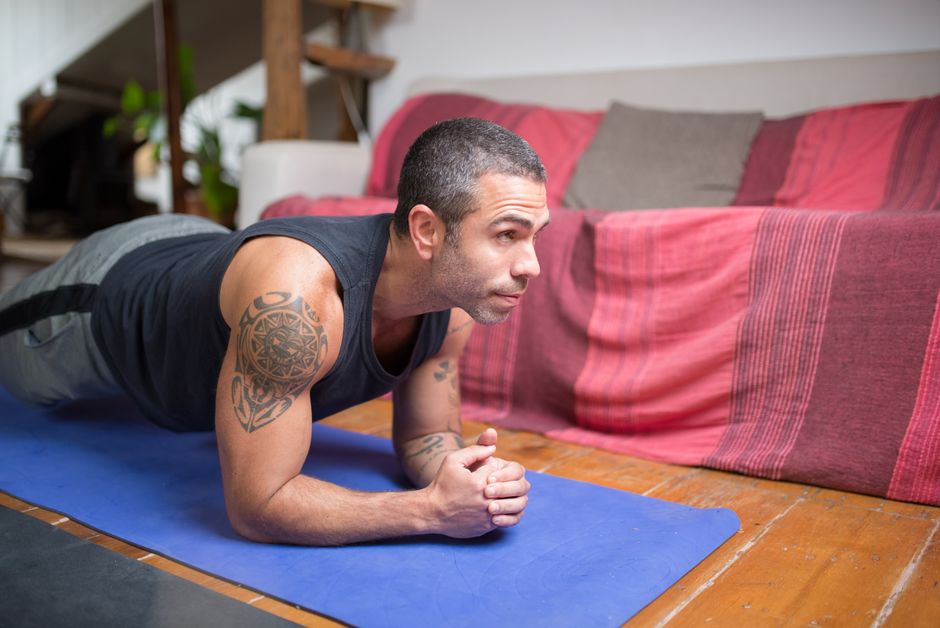
Photo by Kampus Production on Pexels
Joint stress during exercise comes largely from movement — the loading and unloading cycle as you push, pull, or squat. Isometric holds eliminate that cycle. You apply steady force through a stable joint position, which means significantly less wear on cartilage and connective tissue. For someone managing osteoarthritis or recovering from a joint injury, this isn't a compromise — it's a smarter strategy.
On the muscle side, isometrics produce high levels of motor unit recruitment. In plain terms, your nervous system calls in nearly all available muscle fibers to sustain a hold under load. That full-fiber recruitment is a powerful stimulus for maintaining muscle mass — which becomes progressively harder to hold onto after your mid-forties.
Isometric training also builds tendon strength, which often lags behind muscle development in traditional programs. Stronger tendons mean more durable joints over the long haul. That's the longevity play.
Isometrics vs. Traditional Lifting: What the Science Says
Traditional strength training — squats, deadlifts, rows, presses — remains the gold standard for building muscle. Nobody is arguing otherwise. Progressive overload through a full range of motion produces strength across the entire movement arc and drives meaningful hypertrophy.
But here's the honest comparison: isometric training produces strength gains that are angle-specific. If you hold a wall sit at 90 degrees, you build strength primarily at that knee angle. Traditional lifting builds strength across the full range. This is a real limitation worth understanding.
The practical workaround is to train isometric holds at multiple joint angles — a concept called overcoming isometrics at different positions. Combine that with even light dynamic movement, and you cover the full spectrum.
For muscle retention specifically, research consistently shows that isometric protocols can match or come close to dynamic training for preserving muscle mass — particularly in older adults. When heavy loading isn't an option, holding hard for time is a legitimate substitute, not a consolation prize.
The smart approach: use both. Isometrics fill the gaps where your joints won't tolerate load. Traditional training handles the rest.
5 Isometric Exercises to Start With
These five moves cover your major muscle groups with zero equipment required. For each hold, breathe steadily — never hold your breath. Exhale slowly during the hardest part of the contraction.

Photo by Victor Freitas on Pexels
1. Wall Sit — Quads, glutes, hamstrings. Back flat against the wall, thighs parallel to the floor. Hold 20–45 seconds. Modification: Raise the seat height if knees protest.
2. Dead Hang or Active Hang — Grip, lats, shoulders. Hang from a bar with arms straight (dead) or slightly engaged (active). Hold 10–30 seconds. Modification: Use a low bar with feet lightly touching the floor.
3. Plank Hold — Core, shoulders, glutes. Forearms or hands, body in a straight line, hips level. Hold 20–60 seconds. Modification: Drop to knees while keeping hips low.
4. Glute Bridge Hold — Glutes, hamstrings, lower back. Hips raised, squeeze hard at the top. Hold 30–45 seconds. No modification needed — this is already joint-friendly.
5. Isometric Row (Band or Door) — Upper back, biceps, rear delts. Pull a resistance band to your torso and hold the contracted position. 20–40 seconds.
How to Build This Into Your Existing Routine
You don't need to overhaul your training to get the benefits of isometrics. The most effective approach is integration — adding holds into workouts you're already doing.
One simple method: add a pause at the hardest point of a rep. During a bicep curl, hold at 90 degrees for 3 seconds before lowering. During a bodyweight squat, pause at the bottom for a count of five. These micro-isometrics compound over a session without adding significant time.
If you want dedicated isometric work, three sessions per week is a solid starting point. Keep total hold time per exercise between 60 and 120 seconds, broken into sets — for example, three 30-second holds with 60 seconds of rest between them.
Progressive overload still applies. Increase hold duration before adding resistance. Once a 45-second wall sit feels manageable, move to 60 seconds before adding a weight vest. The principle doesn't change just because the movement does.
Finally, pair isometric sessions with some light dynamic movement — even a short walk or gentle mobility work. Isometrics improve tension capacity; full movement trains your body to use that tension in the real world.
What to Expect and When
Set honest expectations. Isometric training works, but it's not a shortcut — it's a smarter road to the same destination.
In the first two to four weeks, most people notice improved joint stability and better body awareness. You'll feel where your muscles are actually firing versus just moving a weight through momentum. That neuromuscular feedback is genuinely valuable, especially if you've been training for years without it.
Strength gains become noticeable around weeks four to eight, particularly at the specific angles you've been training. You may find that other exercises feel steadier and more controlled — because your tendons and stabilizers have been getting real work.
Muscle retention benefits require consistency over months, not weeks. Think of isometric training the way you think about good nutrition: the payoff is cumulative and long-term, not dramatic and immediate.
One thing nearly everyone reports early: isometric holds are harder than they look. A 40-second wall sit will humble you. That difficulty is the signal — your muscles are working at high intensity without a single inch of movement. Respect the hold. Own the stillness. That's where the strength lives.
Conclusion
Isometric training won't replace everything in your program — and it doesn't need to. What it does is fill a genuine gap: high-intensity muscle work with minimal joint stress, on your terms. If heavy lifting has been feeling like a negotiation with your body lately, isometrics give you a way to stay strong without that fight. Start with one hold this week. The wall sit. Three sets of 30 seconds. Feel what real muscular tension without momentum actually demands of you — then build from there. Strong today. Strong tomorrow. Strong for life.
Take the Next Step
Put the Knowledge
Into Action
Send a question or use the starter resources to plan your next practical step.