Heated Strength Training: The Recovery Edge You're Missing
Discover how training in heat amplifies muscle growth, speeds recovery, and protects joints—especially for lifters 50 and beyond.
Fit Life 50+ Staff
Fitness and wellness resources for adults over 50
Discover how training in heat amplifies muscle growth, speeds recovery, and protects joints—especially for lifters 50 and beyond.
The Concept Solidcore Is Quietly Proving
Solidcore, the low-impact, high-intensity studio chain, has been delivering its signature slow-twitch muscle destruction in heated rooms—and something interesting keeps showing up: members recover faster, feel looser, and report less post-workout soreness than they expected from that level of effort.

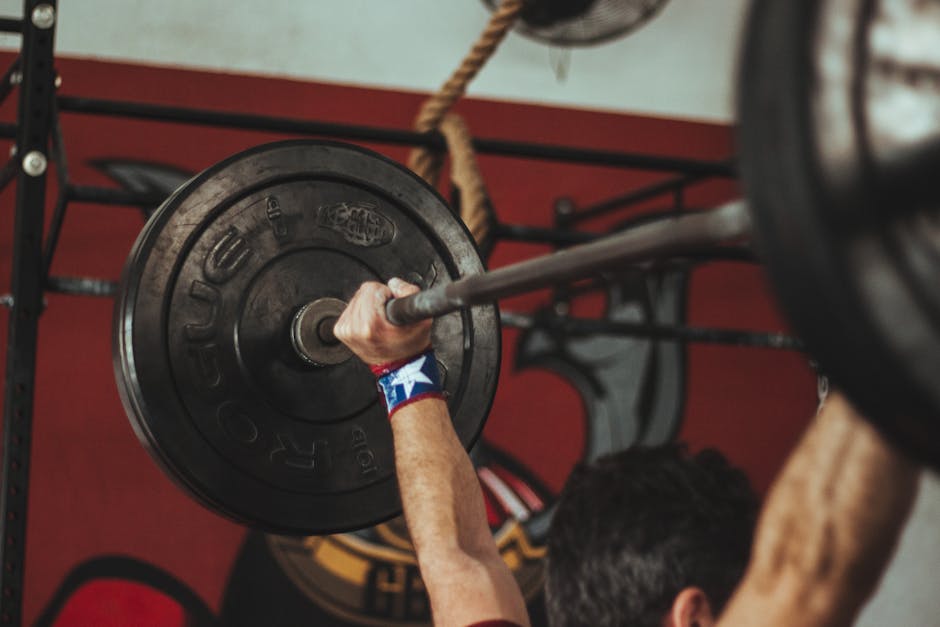
Photo by Pavel Danilyuk on Pexels
That's not marketing. That's exercise physiology doing its thing.
Heat has long been studied in the context of passive recovery—saunas, hot baths, thermotherapy. But training in a moderately elevated temperature environment stacks a different kind of benefit. It combines the mechanical stress of resistance work with the circulatory and hormonal responses that heat uniquely triggers.
Mainstream fitness is starting to pay attention. But the 50+ community—where recovery time, joint comfort, and long-term sustainability matter most—stands to gain the most from understanding exactly what's happening and how to apply it intelligently.
What Heat Actually Does to Your Muscles
When you exercise in a warm environment (think 80–90°F range, not a furnace), your core temperature rises faster and stays elevated longer. That elevation triggers a cascade of responses that directly support muscle adaptation.
One of the most compelling is the upregulation of heat shock proteins (HSPs). These are cellular repair proteins that activate under thermal stress. Research consistently shows HSPs help repair damaged muscle fibers more efficiently—which means less breakdown time between sessions and more net adaptation over weeks and months.
Warm muscles are also more pliable and extensible. Connective tissue becomes more elastic at higher temperatures, which translates to better range of motion during your working sets. Better range of motion means more complete muscle recruitment. More complete muscle recruitment means more stimulus for growth—from the same weight, the same reps.
For anyone focused on progressive overload, this is significant. You don't always need more load. Sometimes you need better access to the range you already have.
The Recovery Speed Equation
Recovery isn't rest—it's active biological work. Circulation delivers nutrients. Lymphatic flow clears metabolic byproducts. Growth hormone drives tissue repair. Heat accelerates all three.
Elevated body temperature increases blood flow to working muscles by a measurable degree. More blood flow means more oxygen delivery and faster clearance of lactate and other metabolic waste. This is why a warm shower or sauna after training has genuine recovery value—and why training warm may front-load some of that benefit.
Growth hormone (GH) release is also enhanced by thermal stress. GH is critical for muscle repair and fat metabolism at any age, but as natural GH production declines after 40, any legitimate stimulus that supports its release becomes strategically important.
This doesn't mean you need to train in a sauna or turn your garage gym into a steam room. But understanding that a properly warmed-up body in a warm training environment is a more efficient recovery machine changes how you think about your setup, your warm-up protocol, and your post-training routine.
Why Joint Health Changes the Entire Conversation for 50+ Lifters
Here's where this topic becomes less about performance optimization and more about longevity.
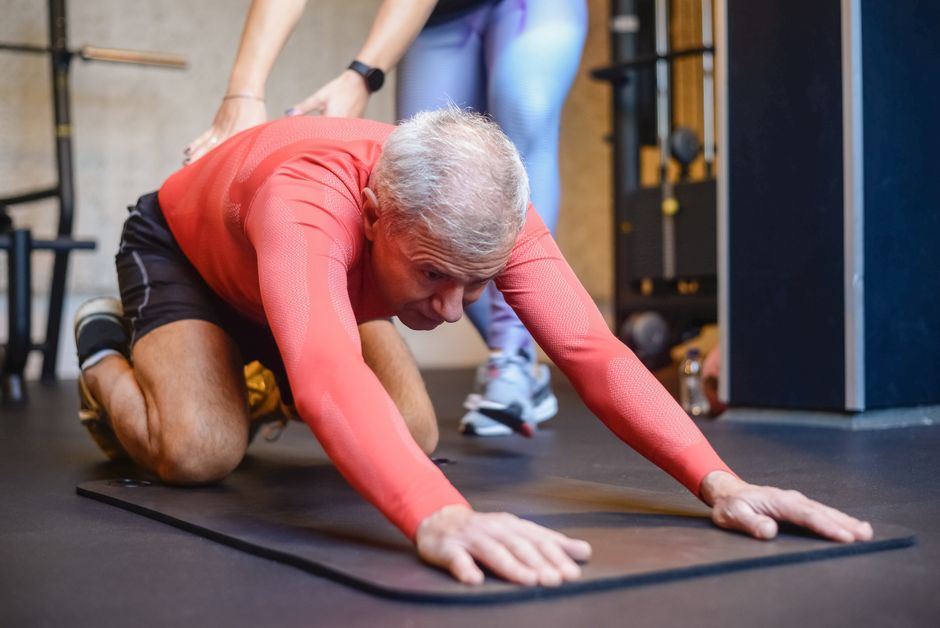
Photo by Kampus Production on Pexels
Synovial fluid—the lubricant inside your joints—becomes less viscous and more effective at cushioning at higher temperatures. Cold, stiff joints are more injury-prone, especially under load. Warm joints move more freely, absorb force more efficiently, and cause less friction on cartilage over time.
For anyone managing mild arthritis, old injuries, or the general joint stiffness that accumulates with decades of living, this matters enormously. Training in a warmer environment or extending your thermal warm-up phase isn't coddling yourself—it's reducing cumulative wear on structures that don't regenerate the way muscle does.
The practical implication: don't rush to your working weight from a cold start. Prioritize getting your joints warm—through movement, environment, or both—before you ask them to perform. That investment in your first 10 minutes protects the next 30 years.
How to Apply This Without a Boutique Studio Membership
You don't need to join a heated Pilates reformer class to access these benefits. The principles are transferable to any training environment with a few deliberate adjustments.
1. Extend your dynamic warm-up to 10–15 minutes. Don't treat it as optional. Light cardio, joint circles, and bodyweight movement patterns raise core and muscle temperature before you ever touch a barbell or resistance band.
2. Train in a comfortably warm room. If you train at home, 68–75°F with light layering is enough to keep core temperature elevated between sets. You're not trying to sweat through a session—you're maintaining thermal readiness.
3. Shorten rest periods modestly. Longer rest periods allow significant temperature drop. For hypertrophy-focused work, 60–90 second rests keep the system warm and cardiovascular demand honest.
4. Finish with 10–15 minutes of heat exposure. A warm shower, heating pad on the primary muscles worked, or sauna access if available. This extends the HSP and GH response window beyond the session itself.
None of this is complicated. All of it is evidence-informed.
The Bigger Picture: Smarter Training, Not Harder
The fitness industry has a habit of chasing novelty—new modalities, new gadgets, new metabolic hacks. What's easy to miss is that some of the most powerful training tools are environmental and behavioral, not equipment-based.
Heat is one of them. It's been used in recovery contexts for decades. Athletic trainers know it. Physical therapists apply it routinely. What's newer is the growing body of evidence suggesting that incorporating thermal stress into the training session itself—not just after—may compound those benefits.
Solidcore didn't invent this science. But their model is putting it in front of a mainstream fitness audience in a way that's hard to ignore. The smart move is to understand why it works, strip it down to its actionable principles, and apply those principles to however you already train.
Strong Today. Strong Tomorrow. Strong for Life means continuously refining your approach—not training the same way for 20 years and wondering why results plateau. Heat is one variable worth controlling deliberately.
Conclusion
The takeaway here isn't that you need to overhaul your training or spend money on heated studios. It's simpler than that: treat thermal preparation as a non-negotiable part of every session. Warm your body before you load it. Keep it warm between sets. Extend heat exposure after you finish. These are low-cost, high-return habits that accelerate recovery, protect joints, and support the muscle adaptation you're working hard to earn. Start with your warm-up. Make it longer, more intentional, and more movement-rich than you think you need. Your future self will train harder—and feel better doing it.
Take the Next Step
Put the Knowledge
Into Action
Send a question or use the starter resources to plan your next practical step.