Ego Lifting Is Killing Your Gains (Go Lighter, Grow More)
Ego lifting sabotages muscle growth and raises injury risk. Learn why controlled, lighter lifting builds more muscle — at any age.

Fit Life 50+ Staff
Fitness and wellness resources for adults over 50
Ego lifting sabotages muscle growth and raises injury risk. Learn why controlled, lighter lifting builds more muscle — at any age.
The Weight on the Bar Is Lying to You
Walk into any gym and you'll spot it within minutes — someone loading up a barbell far beyond what their body can actually control, then grinding out a half-rep with every muscle except the one being targeted. That's ego lifting. And it's quietly sabotaging progress for thousands of lifters who wonder why they're not seeing results.
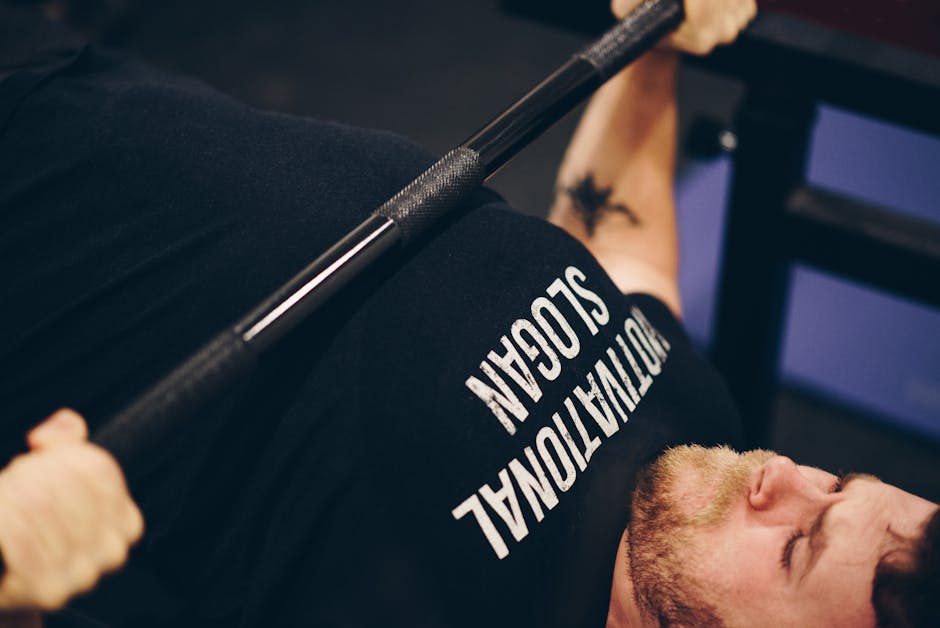
Photo by Anete Lusina on Pexels
Here's the hard truth: the weight on the bar means nothing if your target muscle isn't doing the work. Momentum, compensating muscles, and shortened range of motion can all make a heavy lift look impressive while delivering almost none of the stimulus your muscles actually need to grow.
This isn't about being weak. It's about being smart. The lifters who make consistent, long-term progress — the ones still training strong at 50, 60, and beyond — are almost always the ones who mastered load management early. They train the muscle, not the ego. And that distinction changes everything.
What Actually Triggers Muscle Growth
Muscle growth — hypertrophy — happens when muscle fibers experience enough mechanical tension and metabolic stress to trigger an adaptive response. Your body essentially says, "that was hard, I need to be better prepared next time," and rebuilds those fibers slightly larger and stronger.
The critical word there is tension on the muscle — not tension on the bar. When you load more weight than you can control, the movement breaks down. Your range of motion shortens. Synergist muscles take over. The target muscle never reaches the level of tension needed to drive meaningful adaptation.
Research consistently shows that moderate loads performed through a full, controlled range of motion produce equal or greater hypertrophy than heavy loads with compromised form. You don't need to max out to grow. You need to feel the muscle working through every inch of every rep.
This is why a seasoned lifter doing a perfectly controlled 50-pound dumbbell curl will often build more bicep mass than someone swinging 80 pounds from their hips. The muscle doesn't know how much is on the bar. It only knows how hard it's working.
The Injury Tax Nobody Talks About
Ego lifting doesn't just limit your gains — it levies a tax on your future training. Every forced rep with poor form, every joint loaded outside its natural range, every tendon stressed beyond its capacity is a small withdrawal from your long-term training account.

Photo by Ketut Subiyanto on Pexels
For lifters over 50, this tax compounds faster. Connective tissue recovery slows with age. Tendons and ligaments don't heal as quickly as they did at 25. A rotator cuff strain, a tweaked lower back, or a nagging knee issue can sideline you for weeks — sometimes months. And every week you're not training is a week your muscles aren't growing.
Staying healthy isn't a passive goal — it's an active performance strategy. The best training session you can do is the one you can recover from and repeat. Consistency over time beats intensity in any single session. Lifters who stay injury-free for years accumulate far more quality training volume than those who cycle through heavy phases and forced recovery.
Protecting your joints, moving through full range, and keeping loads honest isn't playing it safe. It's playing it smart.
Full Range of Motion: The Multiplier You're Ignoring
If there's one technical variable that separates effective lifting from ego lifting, it's range of motion (ROM). A full-range rep places the target muscle under tension for longer, stretches it under load at the bottom position, and forces it to generate force through its complete functional arc. That combination is a powerful driver of both strength and hypertrophy.
When lifters load too heavy, the first thing to go is ROM. The squat turns into a quarter squat. The bench press barely clears the chest. The row never pulls all the way back. In each case, the muscle is shortchanged — it never reaches the stretched position that produces some of the highest mechanical tension in the entire movement.
Dropping weight by 20-30% and completing full, controlled reps will often feel harder than the heavier partial rep version — because it is harder on the muscle that matters. That's the signal you're looking for. If a lighter weight done correctly humbles you, that's not weakness. That's your nervous system connecting to muscles that have been coasting for months.
Full range of motion is free performance. It costs nothing except ego.
Smart Load Selection: A Practical Framework
So how do you know if you're lifting the right weight? A simple, reliable method is the technical failure test: choose a load where your form breaks down at or after your target rep range — not before it. If your form collapses at rep 6 and you're targeting 10-12, the weight is too heavy. If you finish 12 reps and could easily do 6 more with perfect form, it's too light.
A useful rule of thumb is the 3-rep buffer rule: pick a weight where you could do 3 more reps beyond your working set — but don't. That leaves enough in the tank to maintain technique while still creating meaningful stimulus. This is sometimes called leaving reps in reserve (RIR), and it's one of the most underused tools in strength training.
For practical application:
- Compound lifts (squats, deadlifts, presses): Prioritize form absolutely. These movements involve large joints and high loads — the stakes are highest here.
- Isolation exercises (curls, lateral raises, flyes): Use a weight where you feel the target muscle burning before your form breaks. Slow the tempo down. Pause at the peak contraction.
- Every set, every rep: Ask yourself — who's doing the work right now? If the answer isn't the target muscle, the weight is too heavy.
This framework works at 25. It works at 55. It works for life.
The Longevity Lifter Mindset
There's a quiet revolution happening in gyms among lifters who've figured this out. They're not chasing PRs every session. They're not posting max-out videos. They're training with intention, respecting the process, and building bodies that keep performing decade after decade.
This is what Longevity Over Ego actually looks like in practice. It's not timid training — these athletes work hard, train close to failure, and challenge themselves constantly. But they do it with loads their body can handle, through ranges of motion their joints can sustain, at a pace their recovery can support.
The 50+ community understands this intuitively, because experience teaches what youth sometimes obscures: the goal isn't to win the session. The goal is to still be training ten years from now. But this mindset is a gift for any age. A 30-year-old who lifts with longevity principles will still be strong, mobile, and injury-free at 60. A 30-year-old who ego lifts through their joints may not be.
Strong today. Strong tomorrow. Strong for life. That's not a slogan — it's a training strategy.
Conclusion
Ego lifting feels productive in the moment, but it's one of the most common reasons lifters plateau, get hurt, and lose years of potential progress. The counter-intuitive truth is this: going lighter, moving through a full range of motion, and keeping the tension on the muscle you're targeting will build more strength and more muscle over time than any heavy, sloppy set ever will. Your one actionable takeaway: on your next training session, drop your working weights by 15-20%, slow every rep down, and focus entirely on feeling the target muscle work. That single shift may be the most productive thing you do all year.
Take the Next Step
Put the Knowledge
Into Action
Send a question or use the starter resources to plan your next practical step.