Eccentric Training: The Muscle Secret Most Lifters Ignore
Slow the lowering phase and watch your muscle growth accelerate. Here's the science behind eccentric training and why it changes everything.

Fit Life 50+ Staff
Fitness and wellness resources for adults over 50
Slow the lowering phase and watch your muscle growth accelerate. Here's the science behind eccentric training and why it changes everything.
The Half You're Probably Throwing Away
Every rep has two halves. There's the lift — the push, the pull, the press — and then there's the lowering phase, where you return the weight to the starting position. Most lifters treat that second half like a formality. The set is over, the muscle is done, just drop the weight and reset.
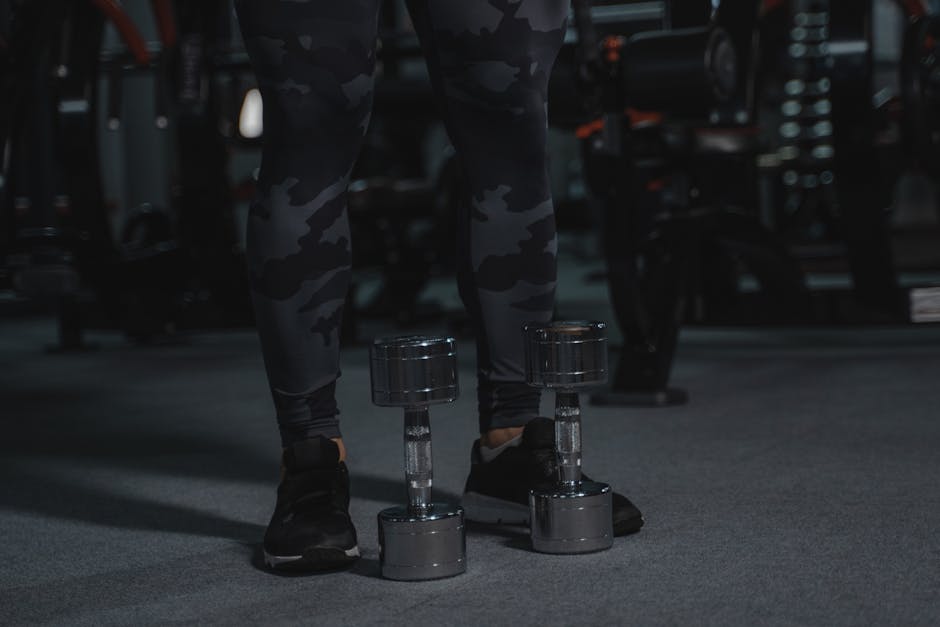
Photo by Tima Miroshnichenko on Pexels
That assumption is costing you serious gains.
The lowering phase — known as the eccentric contraction — is where your muscle fibers are lengthening under load. And research consistently shows that this phase produces greater mechanical tension, more microscopic muscle damage, and a stronger growth signal than the lifting phase itself. You are literally leaving muscle on the table every time you let gravity do that work for you.
The good news? You don't need heavier weights, more sets, or extra gym time to fix this. You just need to slow down and get deliberate. That's it. One small change with an outsized payoff — and it works for every lifter at every level.
What the Science Actually Says
Your muscles can handle significantly more load during an eccentric contraction than during a concentric (lifting) one. This is a well-established principle in exercise physiology — sometimes called eccentric strength superiority. Think about it: you can lower more weight than you can lift. That capacity gap is where hypertrophy opportunity lives.
When a muscle fiber lengthens under tension, it generates high mechanical stress — one of the primary drivers of muscle protein synthesis. This triggers satellite cell activation, which is essentially your body recruiting the biological tools needed to repair and build new muscle tissue. The concentric phase matters too, but the eccentric phase delivers a stronger, more targeted growth stimulus.
Eccentric training also produces more delayed onset muscle soreness (DOMS), which is why a new movement makes you sore even if the weight felt light. That soreness is a signal of the adaptation process at work — not something to always fear or chase, but worth understanding.
For anyone focused on maximizing hypertrophy without piling on more volume or heavier loads, emphasizing the eccentric phase is one of the most evidence-supported strategies available.
Why This Is a Game-Changer After 50
Here's where eccentric training earns a special place in any smart training plan for the 50+ crowd — though the benefits apply to everyone.
As we age, maintaining and building muscle mass becomes both more important and more challenging. The process of muscle protein synthesis slows slightly, meaning we need to make every training stimulus count. Rushing through reps and relying on momentum is essentially wasting precious training time.
Slowing the eccentric phase delivers a more intense growth signal without requiring heavier weights. That matters enormously for joint health. High loads create high compressive forces on knees, shoulders, hips, and the spine. Eccentric-focused training lets you generate greater muscle tension at moderate — even lighter — loads, reducing joint stress while maximizing the hypertrophic stimulus.
For anyone managing mild arthritis, past injuries, or simply training smarter for longevity, this is not a compromise. It's an upgrade. You're training harder in the way that matters most — the stimulus delivered to the muscle — while being kinder to the structures that support it. That's the definition of longevity over ego.
Before and After: What a Rep Actually Looks Like
Let's make this concrete. Take a standard dumbbell bicep curl as the example.

Photo by Joel Santos on Pexels
Before (most people's approach): Curl the weight up in about 1 second, then let it drop back down in 1 second or less — often assisted by a slight body swing. Two seconds total, minimal eccentric stimulus, momentum doing half the work.
After (eccentric-focused approach): Curl the weight up in 1–2 seconds with control, pause briefly at the top, then lower it back down over 3–4 full seconds — smooth, deliberate, resisting gravity the entire way. Total rep time: 5–6 seconds. Every fiber working on the way down.
The difference in muscular effort is immediate and unmistakable. That second version is harder — and that's the point.
A practical tempo to start with is 2-0-3: two seconds up, no pause, three seconds down. Apply this to any compound or isolation movement — squats, rows, chest press, Romanian deadlifts — and you've just transformed an ordinary workout into a precision hypertrophy tool. No new exercises required. Just intention.
How to Program Eccentric Training Without Overdoing It
Eccentric training is powerful — which also means it creates more muscle damage and requires more recovery. If you go from rushing every rep to full slow eccentrics on every exercise in every set, expect to be very sore and potentially under-recovered.
Start with one or two exercises per session where you deliberately apply a slow eccentric tempo. Choose movements where you already have solid form. Compound movements like the squat, Romanian deadlift, bench press, and row are excellent starting points because they recruit large amounts of muscle mass.
A sensible progression might look like this:
- Weeks 1–2: Add a 3-second eccentric to one exercise per session
- Weeks 3–4: Extend to two or three exercises, or increase the eccentric to 4 seconds
- Beyond that: Assess recovery, soreness, and performance — then adjust
Form cues matter even more here. A slow eccentric done with a collapsing spine or flaring elbows is worse than a faster rep done cleanly. Slow tempo does not forgive poor mechanics — it exposes them. Use the slower pace to refine your movement patterns, not just to rack up time under tension.
Breathing: inhale during the lowering (eccentric) phase, exhale during the lift (concentric). This supports intra-abdominal pressure and keeps your core braced through the full rep.
Modifications for Every Fitness Level
One of the most elegant things about eccentric training is that it scales to any fitness level without requiring a full program overhaul.
Beginners: Start with bodyweight movements. A slow push-up lowering (3–4 seconds down to the floor) or a controlled bodyweight squat descent builds the neural patterns and muscle conditioning needed before adding load. These feel deceptively simple and are genuinely effective.
Intermediate lifters: Apply a 3-second eccentric to your primary compound lift in each session. Keep accessory work at a normal tempo to manage overall training volume and recovery.
Advanced or experienced lifters: Explore supramaximal eccentrics — using a load slightly above your concentric max and only performing the lowering phase (with a spotter or appropriate safety setup). This is a specialized technique and should be used sparingly, but it represents the outer edge of eccentric loading for those chasing maximum hypertrophic stimulus.
For anyone with joint sensitivity, consider eccentric-only or eccentric-emphasized single-leg or single-arm movements. These allow you to load one limb at a time, reducing total weight while maintaining — or even increasing — the stimulus to the working muscle.
The principle remains constant across all levels: control the lowering, own the negative, and let the muscle do the work.
Conclusion
The lowering phase of every rep is not the end of the exercise — it's arguably the most important part. Slowing your eccentrics costs you nothing but a little ego and a little momentum, and it pays back in muscle growth, joint-friendly loading, and a smarter training stimulus at any age. Your one actionable takeaway: pick one exercise in your next session and lower the weight over a deliberate 3–4 seconds. Feel the difference. Then decide if you ever want to rush that phase again. Strong today, strong tomorrow, strong for life.
Take the Next Step
Put the Knowledge
Into Action
Send a question or use the starter resources to plan your next practical step.