Drop Sets Decoded: Build More Muscle Safely After 50
Drop sets can accelerate muscle growth at any age—if you know the science. Learn how to use this technique safely, smartly, and sustainably after 50.

Fit Life 50+ Staff
Fitness and wellness resources for adults over 50
Drop sets can accelerate muscle growth at any age—if you know the science. Learn how to use this technique safely, smartly, and sustainably after 50.
What Drop Sets Actually Are (Beyond the Hype)
Social media makes drop sets look like a magic muscle hack—finish a set, strip some weight, keep going, repeat. Dramatic. Sweaty. Satisfying to film. But the real reason they work has nothing to do with the spectacle.

Photo by Jason Morrison on Pexels
A drop set is a technique where you perform a set to or near failure, immediately reduce the load by 10–30%, and continue repping without a traditional rest period. You're extending the time your muscle fibers spend under mechanical tension—the primary driver of hypertrophy—beyond what a single straight set allows.
The key word is immediately. Rest periods longer than 10–15 seconds start defeating the purpose, because your fast-twitch fibers begin recovering and the metabolic stress—one of the three well-established mechanisms of muscle growth—dissipates. Drop sets work by recruiting deeper layers of muscle fibers progressively as the stronger ones fatigue. That's not hype. That's physiology.
The Science Behind Why They Build Muscle
Three primary mechanisms drive muscle hypertrophy: mechanical tension, metabolic stress, and muscle damage. A standard set optimizes one or two of these. A well-executed drop set hits all three in a single extended effort.
Here's what's happening inside the muscle: as your higher-threshold motor units fatigue during the first portion of the set, your nervous system recruits additional fibers to compensate. When you drop the weight and continue, those previously "sleeping" fibers now have to work. You're essentially getting two recruitment waves in one continuous effort.
Research on training volume and hypertrophy consistently shows that total working volume—sets multiplied by reps multiplied by load—is one of the strongest predictors of muscle growth. Drop sets let you accumulate meaningful volume in a compressed time frame. That's the legitimate efficiency argument, and it's a solid one. What the social media clips don't show is that this same quality makes them easy to overdo.
Why Recovery Changes Everything After 50
Here's the honest conversation most fitness content skips: your ability to generate intensity and your ability to recover from it are two different systems—and after 50, the gap between them widens.
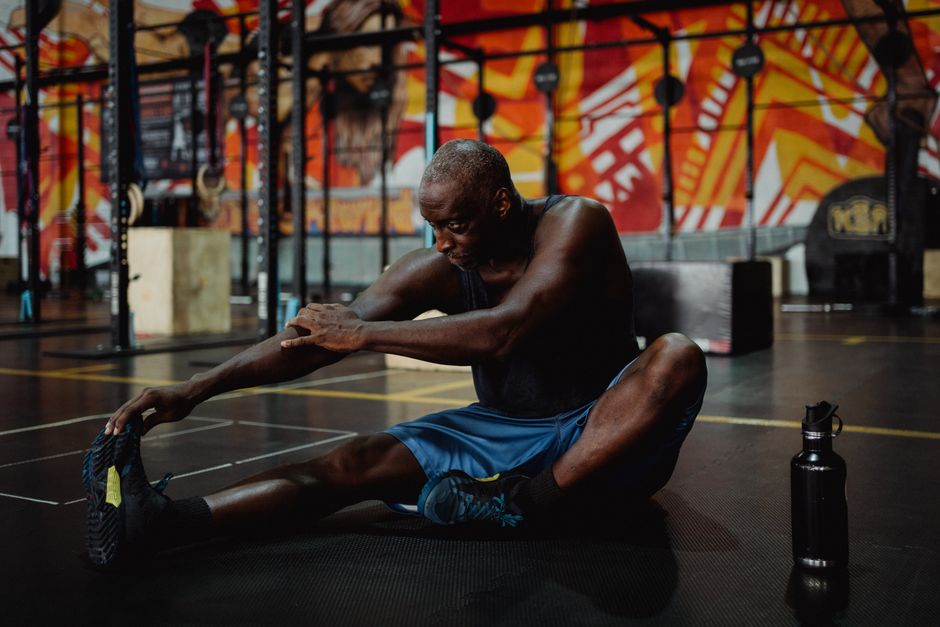
Photo by Ketut Subiyanto on Pexels
The nervous system fatigue generated by drop sets is disproportionate to what the soreness tells you. You might feel fine the next morning and genuinely be under-recovered. Training hard again on top of incomplete recovery doesn't produce more adaptation—it produces stagnation, chronic inflammation, and injury.
This doesn't mean drop sets are off-limits. It means frequency and placement matter more, not less. One to two exercises per session using drop sets is a ceiling for most lifters in this age range, not a floor. Scheduling them on days that don't precede high-demand training sessions is non-negotiable.
Sleep quality, protein intake (aiming for adequate daily protein spread across meals), and stress load all directly affect recovery capacity. Drop sets amplify both the reward and the cost. Manage the cost first, and the reward takes care of itself.
How to Actually Execute Drop Sets Correctly
Start with isolation or machine-based exercises. Cables, dumbbells, and machines allow for fast, safe weight reductions and remove the balance and coordination demands that compound movements introduce when you're fatigued. Bicep curls, lateral raises, leg press, cable rows—these are your drop set allies. Barbell back squats are not.
A reliable beginner drop set protocol:
- Perform your working set to 1–2 reps shy of failure
- Immediately reduce load by 20–25%
- Continue for 6–10 more reps
- That's one drop. Rest fully (2–3 minutes) before repeating
Breathing: Exhale on the exertion (the lift or push), inhale on the return. Under fatigue, people forget to breathe. Don't. Holding your breath during loaded movements spikes blood pressure unnecessarily.
Form is the non-negotiable. When form breaks down, the set ends—regardless of what the weight says. Sloppy reps don't build muscle faster. They build injury faster. The moment your lower back rounds, your elbows flare, or your range of motion collapses, rack it.
Why Drop Sets Work Better for Some Bodies Than Others
This is the part the fitness influencers never explain: drop sets have an uneven return on investment depending on your muscle fiber composition, training history, and recovery profile.
People with a higher proportion of fast-twitch muscle fibers tend to respond more dramatically to drop sets, because those fibers fatigue quickly but respond well to the recruitment cascade the technique creates. Endurance-dominant, slow-twitch individuals often see better results from higher-rep straight sets or rest-pause training instead.
How do you know which type you are? As a rough self-assessment: if you tend to perform better at lower reps with heavier loads and lose steam quickly in high-rep sets, you likely have more fast-twitch dominance. If you can grind out 15–20 reps at moderate load without dramatic strength drop-off, your fiber profile leans slow-twitch.
Training history matters too. Lifters with 2+ years of consistent experience are better equipped to handle and recover from drop set intensity than those newer to structured strength training. There is no shame in building the foundation before adding advanced techniques. In fact, that's exactly how smart programming works.
The Right Way to Add Drop Sets to Your Program
Drop sets are a tool, not a program. The distinction matters enormously. Using them on every set, every session, every week is how lifters burn out, stall, or get hurt—at any age.
A sustainable integration model:
Weeks 1–2: Add one drop set to the final set of one isolation exercise per session. Track recovery closely—sleep quality, next-day soreness, and motivation are your real-time feedback loop.
Weeks 3–4: If recovery is solid, expand to two exercises. Keep drop sets to the last working set of each movement, not every set.
Deload every 4th week: Remove drop sets entirely. Reduce overall volume by 30–40%. This isn't optional—it's where the adaptations solidify.
The progressive overload principle still applies here. Over time, the goal isn't to do more drop sets—it's to do them with heavier starting loads. That's progress. That's the metric that tells you the technique is working.
If you're newer to lifting or returning after a break, spend 8–12 weeks building your baseline with standard straight sets first. Drop sets reward a body that's already adapted to training stress. Build that foundation, and drop sets become a genuine accelerator.
Conclusion
Drop sets are a legitimate, science-supported technique—not a shortcut, not a gimmick. When you understand the mechanism, respect your recovery, and integrate them progressively, they become one of the most efficient tools in your training arsenal at any age. Your one takeaway: add a single drop set to the last set of one isolation exercise this week. Track how you feel 48 hours later. Let your recovery guide your next step. That's not playing it safe—that's playing it smart. Strong today, strong tomorrow, strong for life.
Take the Next Step
Put the Knowledge
Into Action
Send a question or use the starter resources to plan your next practical step.