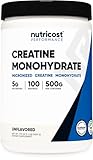
Creatine isn't just for bodybuilders. Discover how this research-backed supplement supports strength, muscle, and brain health for adults 50 and beyond.
Why Creatine Deserves a Second Look
If you've ever dismissed creatine as a supplement for young gym bros chasing bigger biceps, you're not alone — and you're not entirely wrong about its reputation. But the science tells a different, more compelling story.

Photo by Towfiqu barbhuiya on Pexels
Creatine is one of the most extensively studied sports supplements in existence. Decades of research across diverse populations have consistently shown it to be both safe and effective. And increasingly, researchers are pointing to adults over 50 as one of the groups who stand to benefit most from supplementation.
Here's the problem: as we age, our natural creatine stores decline. Muscle tissue decreases. Power output drops. Recovery takes longer. Creatine directly addresses several of these changes at the cellular level — not by masking symptoms, but by actually supporting the energy systems your muscles rely on during high-effort work.
This isn't hype. This is biology. And once you understand the mechanism, the case for creatine becomes difficult to ignore.
How Creatine Actually Works
Your muscles run on a molecule called ATP — adenosine triphosphate. Think of ATP as the currency your body spends every time a muscle fiber contracts. The problem is your muscles only store a tiny amount of it at any given moment.
This is where creatine comes in. Your body converts creatine into phosphocreatine, which acts as a rapid reserve tank. When ATP runs out during high-intensity effort — think a heavy squat, a sprint, or a set of push-ups — phosphocreatine donates a phosphate group to regenerate ATP almost instantly.
The practical result? You can sustain high-effort output for slightly longer before fatigue sets in. Over weeks and months of training, that small edge compounds into meaningfully greater strength and muscle gains.
Creatine also draws water into muscle cells, which supports an anabolic environment for muscle protein synthesis. This isn't "fake" size — it's the cellular conditions that make growth more likely. For anyone doing resistance training over 50, that biological support is exactly what progressive overload demands.
The Strength and Muscle Case for 50+ Adults
Sarcopenia — the age-related loss of muscle mass and strength — begins as early as your 30s and accelerates after 50. Left unchecked, it contributes to reduced mobility, slower metabolism, and a higher risk of injury. Resistance training is the single most powerful tool against it. Creatine is a legitimate supporting player.

Photo by Ketut Subiyanto on Pexels
Multiple research reviews have found that older adults combining creatine supplementation with resistance training tend to experience greater gains in lean muscle mass and upper- and lower-body strength compared to training alone. The effect isn't dramatic in isolation — creatine is not a shortcut — but when layered on top of consistent, progressive training, it moves the needle.
What makes this particularly relevant for the 50+ lifter is the recovery dimension. Creatine appears to reduce markers of muscle cell damage following intense exercise, which may mean less soreness and faster readiness to train again. In a world where recovery becomes more critical with each decade, that's a meaningful advantage.
Bottom line: Creatine doesn't replace hard work. It helps you get more out of the hard work you're already doing.
The Cognitive Bonus Nobody Talks About
Here's something that rarely makes it into the creatine conversation: your brain uses creatine too.
The brain is an energy-hungry organ, and its cells rely on the same ATP-phosphocreatine system as your muscles. Research suggests that creatine supplementation may support cognitive performance — particularly in areas like short-term memory, processing speed, and mental fatigue resistance.
This is still an evolving area of science, and we're not making dramatic claims here. But the plausible mechanism is solid, and several well-designed studies have shown measurable cognitive benefits, especially in older adults and in situations of sleep deprivation or mental stress.
For the 50+ community — where cognitive vitality is just as important as physical strength — this adds an entirely different dimension to the supplement's value. You're not just investing in stronger muscles. You may be investing in a sharper mind.
Consider that a meaningful bonus on top of the strength and recovery benefits you're already after.
Addressing Safety Concerns Head-On
Let's talk about the objections, because they're valid questions worth answering honestly.
"Doesn't creatine damage your kidneys?" This is the most common concern, and the research is consistently reassuring for people with healthy kidney function. The confusion arises because creatine metabolism produces creatinine, a waste product that can look alarming on a standard blood panel. In healthy individuals, this is not an indicator of kidney damage — it's simply a byproduct of normal creatine use. That said, if you have existing kidney disease or compromised function, consult your doctor before supplementing.
"Will I retain water and feel bloated?" Some people experience mild water retention, particularly in the early days of a loading phase. This is largely avoidable by skipping the loading protocol entirely and starting with a standard daily dose of 3–5 grams. The same benefits arrive — just more gradually.
"Is it safe long-term?" Research studies following supplementation over months and years have not identified safety concerns in healthy adults.
Creatine monohydrate — the original, most-researched form — remains the gold standard. No need for expensive "advanced" formulations.
How to Start: Practical Protocol for 50+ Lifters
Getting started with creatine doesn't require a complicated strategy. Simplicity wins here.
The basics:
- Form: Creatine monohydrate. Full stop. It's the most researched, most effective, and least expensive option.
- Dose: 3–5 grams per day. No loading phase required — it's optional and unnecessary for most people.
- Timing: Consistency matters more than timing. Taking it post-workout with a meal or protein shake is a reasonable habit to build, but the daily accumulation is what drives results.
- Expectations: You won't feel creatine working the way you'd feel caffeine. Its benefits build over 3–4 weeks of consistent daily use as your muscle stores saturate.
A note on hydration: Creatine pulls water into muscle tissue, so staying well-hydrated is genuinely important — not just good general advice. Aim to drink water consistently throughout the day.
As always, if you're managing any chronic health conditions or take medications, run it by your physician first. This isn't fine print — it's just smart practice for anyone at any age.
Conclusion
Creatine isn't a trend. It isn't a shortcut. It's one of the most thoroughly researched supplements available, and the evidence increasingly points to adults over 50 as prime candidates for its benefits — supporting strength, muscle retention, recovery, and potentially cognitive health. The stigma around it is built on outdated assumptions. The science is not. Your one actionable takeaway: pick up a bag of unflavored creatine monohydrate, commit to 3–5 grams a day alongside your training, and give it a full month. Then let the results make the case. Strong today, strong tomorrow, strong for life.