Body Recomposition Blueprint: Build Muscle AND Lose Fat
Build muscle and lose fat at the same time with this 4-week body recomposition protocol covering nutrition, training, and recovery.
Fit Life 50+ Staff
Fitness and wellness resources for adults over 50
Build muscle and lose fat at the same time with this 4-week body recomposition protocol covering nutrition, training, and recovery.
The Myth That's Been Holding You Back
For decades, the fitness world has repeated the same dogma: you must choose between bulking or cutting. Gain muscle first, then lose the fat later. It's presented as biological law — but it isn't.

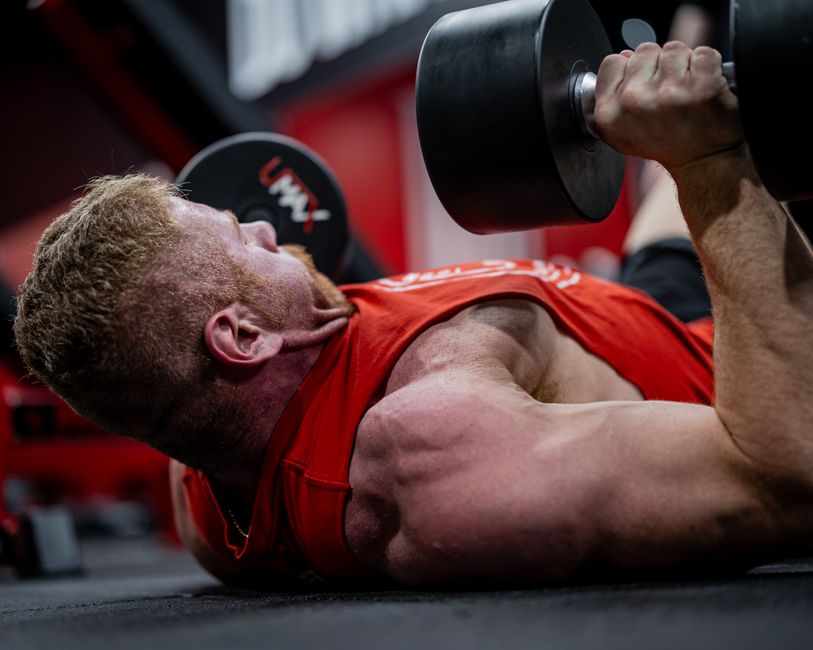
Photo by Doğu Tuncer on Pexels
Body recomposition — building muscle and losing fat simultaneously — is not only possible, it may actually be the smarter strategy for most people over 40. Here's why: if you're carrying any significant body fat and you're not a highly trained competitive athlete, your body has everything it needs to run both processes at once. Fat stores provide the caloric deficit your body needs to fuel metabolism, while adequate protein and the right training stimulus drive muscle protein synthesis forward.
The confusion comes from conflating elite-level bodybuilding advice with everyday fitness goals. Competitors chasing the last 3% of body fat? Yes, they need to separate phases. You? You don't. If you have weight to lose and muscle to build — and most people do — you are exactly who recomposition was designed for.
Stop thinking in phases. Start thinking in systems.
The Science Behind Doing Both at Once
Two things need to happen for body recomposition to work: muscle protein synthesis must exceed muscle protein breakdown, and fat oxidation must exceed fat storage. Your training and nutrition protocol determines which direction each of those scales tips.
When you train with resistance and consume sufficient protein, you send a powerful anabolic signal to your muscles — even in a mild caloric deficit. Research consistently shows that protein intake and mechanical tension (i.e., challenging your muscles progressively) are the primary drivers of muscle retention and growth, not calorie surplus.
Meanwhile, a moderate caloric deficit — not a crash diet — keeps your body mobilizing stored fat for energy. The key word is moderate. Aggressive restriction tanks hormones, increases muscle protein breakdown, and wrecks recovery. That's the opposite of what we want.
For lifters 50 and up, there's an additional edge: if you've taken time off or are returning after a long layoff, muscle memory accelerates your recomposition results dramatically. Prior training history means your motor neurons and muscle fibers reactivate faster than they built the first time. This isn't luck — it's biology working in your favor.
Your Nutrition Framework: Eat to Transform
Recomposition nutrition has three non-negotiable pillars: protein priority, moderate deficit, and diet quality.
Protein: Aim for 0.7–1.0 grams per pound of bodyweight per day (roughly 1.6–2.2g per kilogram). This is higher than mainstream recommendations and intentionally so. Adequate protein preserves muscle under deficit conditions, keeps you fuller longer, and has a higher thermic effect — meaning your body burns more calories just digesting it. Prioritize whole food sources: eggs, chicken, fish, Greek yogurt, cottage cheese, legumes.
Caloric Deficit: Target a modest 200–350 calorie daily deficit. This is not a starvation protocol. Use a TDEE (Total Daily Energy Expenditure) calculator as your starting point, subtract conservatively, and monitor your weekly results. If strength is improving and the scale is slowly moving, you're in the sweet spot.
Diet Quality: Ultra-processed foods disrupt hormones, spike inflammation, and impair recovery — all of which directly undermine recomposition. Fill your plate with whole foods: lean proteins, vegetables, legumes, whole grains, and healthy fats. This isn't about perfection. It's about making quality the default, not the exception.
Track your intake for at least two weeks. What gets measured gets managed.
The 4-Week Training Split
Recomposition demands a training program built on progressive overload — the consistent, intentional increase in training stress over time. Without it, there is no signal for muscle growth. With it, even a modest caloric deficit can't stop your body from getting stronger.

Photo by Ketut Subiyanto on Pexels
The Split (3–4 days per week):
- Day 1 — Upper Body Push: Bench press or push-ups, overhead press, tricep dips, lateral raises
- Day 2 — Lower Body: Squats or goblet squats, Romanian deadlifts, lunges, calf raises
- Day 3 — Upper Body Pull: Rows, lat pulldowns or pull-ups, bicep curls, face pulls
- Day 4 — Full Body / Accessory: Deadlifts, step-ups, core work, loaded carries
Rep Ranges: Work primarily in the 6–12 rep range for hypertrophy, finishing with 1–2 sets of 15–20 reps to maximize metabolic stress.
Progressive Overload Application: Each week, aim to add one rep, add a small amount of weight, or improve your rest-to-work ratio. Small, consistent progress is the mechanism. Form always leads. Never sacrifice technique to move more weight — that's ego lifting, and it costs you results and health.
Rest 60–90 seconds between sets. This keeps intensity high and metabolic demand elevated.
Recovery: The Overlooked Recomposition Variable
Here's the truth most programs gloss over: you don't build muscle during training. You build it during recovery. Training is the stimulus. Sleep, nutrition, and stress management are where the adaptation actually happens.
Sleep: Aim for 7–9 hours per night. Growth hormone — a critical driver of both muscle synthesis and fat metabolism — is primarily secreted during deep sleep. Chronic sleep deprivation elevates cortisol, suppresses testosterone, and accelerates muscle breakdown. No supplement stack outperforms a consistent sleep schedule.
Active Recovery Days: On non-training days, stay moving. Walking, light cycling, mobility work, or yoga all improve circulation, reduce soreness, and support hormonal balance without adding recovery debt. Sedentary rest days are not optimal — gentle movement is.
Stress Management: Chronically elevated cortisol is a direct enemy of recomposition. It promotes fat storage (particularly visceral fat) and accelerates muscle protein breakdown. Breathing exercises, time in nature, limiting doomscrolling — these aren't soft suggestions. They are part of your protocol.
For those 50 and over: your recovery timeline may be slightly longer than it was at 30. That's not a limitation — it's information. Train accordingly, and your results will speak for themselves.
Tracking Progress the Right Way
During body recomposition, the scale is your least reliable progress metric. Here's why: as you build muscle and lose fat simultaneously, your weight may barely change — even as your body is dramatically transforming. Stepping on the scale and seeing the same number is not failure. It is recomposition working exactly as intended.
Use these metrics instead:
- Body measurements: Waist, hips, chest, arms, and thighs weekly or bi-weekly
- Progress photos: Same lighting, same time of day, every two weeks
- Strength benchmarks: Are you lifting more? Doing more reps? Recovering faster between sets?
- How your clothes fit: Often the most immediate and motivating indicator
- Energy and sleep quality: Improving energy is a sign your hormones and metabolism are responding
Set a 4-week checkpoint — not a 4-week deadline. Recomposition is slower than a pure bulk or cut, and that's the trade-off for doing both at once sustainably. Most people see meaningful visual change within 6–10 weeks of consistent effort.
Consistency beats intensity every single time. A 70% effort you can sustain for three months will outperform a 100% effort you burn out of in three weeks. Build the habit. Trust the process. Let the results catch up to the work.
Conclusion
Body recomposition isn't a fitness hack — it's the intelligent, sustainable path to a stronger, leaner physique at any age. Nail your protein, train with progressive overload three to four days a week, sleep like it's your job, and measure what actually matters. Your one actionable takeaway: calculate your protein target today, hit it consistently for the next four weeks, and let everything else build on that foundation. Strong today. Strong tomorrow. Strong for life.
Take the Next Step
Put the Knowledge
Into Action
Send a question or use the starter resources to plan your next practical step.