A Surgeon's Top Muscle-Building Exercises After 50
A surgeon ranks the best exercises to build muscle after 50. Cut through the noise with evidence-based picks that work at any age and fitness level.

Fit Life 50+ Staff
Fitness and wellness resources for adults over 50
A surgeon ranks the best exercises to build muscle after 50. Cut through the noise with evidence-based picks that work at any age and fitness level.
Why a Surgeon's Take Cuts Through the Noise
If you've spent any time searching for fitness advice online, you already know the problem. One source tells you to squat heavy. Another says squats destroy your knees. Someone else insists machines are useless, while the next guru swears by them. The conflicting information is exhausting — and it keeps people stuck.
That's exactly why it's worth paying attention when a medical professional with an understanding of human anatomy, tissue mechanics, and how the body actually adapts to stress weighs in on exercise selection. A surgeon doesn't have a program to sell or a supplement to push. They understand what happens to muscle, bone, tendon, and joint under load — and what those structures need to stay healthy and strong over the long term.
This isn't about following celebrity advice or chasing the latest fitness trend. It's about grounding your training in how the body is actually built and what the evidence consistently supports. At FitLife 50+, that's always been the foundation of everything we teach: smart training backed by science, not ego.
The Case for Compound Movements First
Across virtually every credible evidence-based ranking of muscle-building exercises, compound movements — those that work multiple joints and muscle groups simultaneously — consistently come out on top. Squats, deadlifts, rows, presses, and hinges recruit the most muscle tissue per rep, trigger the greatest hormonal response, and build functional strength that carries directly into real life.

Photo by Andrea Piacquadio on Pexels
For anyone over 50, this matters even more. Research consistently shows that sarcopenia — the age-related loss of muscle mass — accelerates without deliberate resistance training. Compound lifts counter this directly by stimulating large amounts of muscle tissue efficiently and loading the skeleton in ways that support bone density.
The key is not to fear these movements but to own them at the appropriate load and depth for your body. A goblet squat is a squat. A Romanian deadlift is a hinge. A seated cable row is a row. The pattern is what builds the muscle — the barbell is just one tool to get there. Start where you are, apply progressive overload over time, and the results follow.
The Surgeon-Approved Tier List — Exercises That Actually Deliver
While specific rankings vary slightly depending on the source, the exercises that appear at the top of evidence-based lists share a common trait: high muscle activation, multi-joint recruitment, and scalability across fitness levels. Here's what consistently earns top marks:
- Squat variations (goblet, front, back) — unmatched for lower body and core development
- Hip hinge patterns (deadlift, Romanian deadlift, trap bar deadlift) — posterior chain powerhouses
- Horizontal and vertical pulls (rows, lat pulldowns, pull-ups) — critical for back strength and posture
- Horizontal and vertical pushes (bench press, overhead press, push-ups) — upper body mass and shoulder health
- Loaded carries (farmer's carry, suitcase carry) — grip, core, and total-body stability
- Unilateral work (split squats, single-leg RDLs, single-arm rows) — corrects imbalances, protects joints
Notice what's missing from the top tier? Isolation-only approaches like endless bicep curls or leg extensions as primary movers. They have a place, but they don't build the broad foundation that keeps you strong and functional for decades.
Form Is the Non-Negotiable — Every Time
A surgeon ranking exercises isn't just thinking about which muscles fire — they're thinking about what happens to your spine, your hips, your knees, and your shoulders when movement mechanics break down under load. Poor form doesn't just limit your gains. Over time, it creates the kind of cumulative joint stress that leads to injury, chronic pain, and eventually, forced time off.
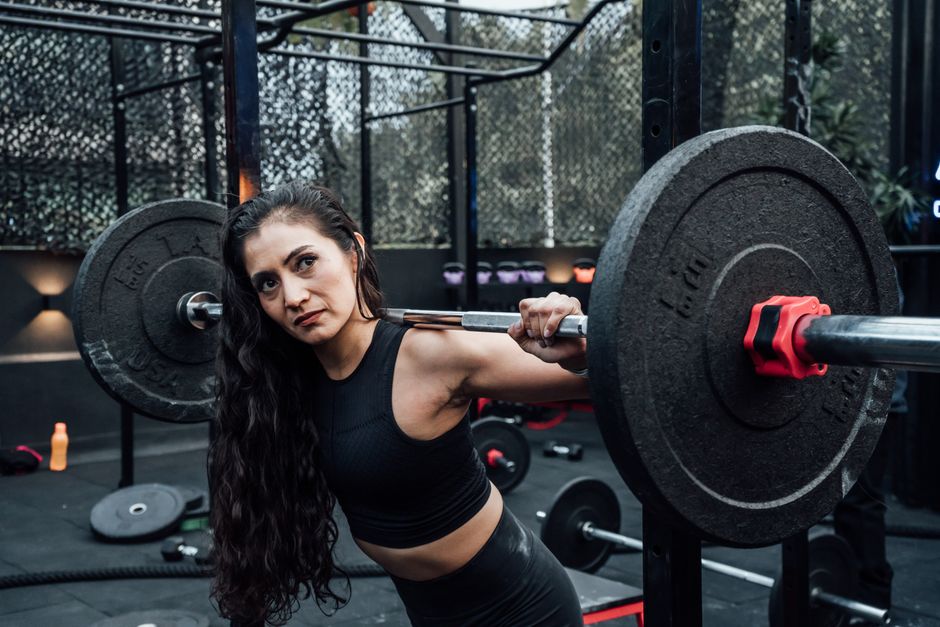
Photo by Miguel González on Pexels
Breathing matters. For most strength exercises, exhale on the effort — the push, pull, or press — and inhale on the return. For heavier compound lifts, a braced intra-abdominal breath (the Valsalva maneuver) before the rep protects the spine.
Brace your core before every rep. Not sucked in — braced, like you're about to absorb a punch. This is your natural weight belt and it should be active on every single set.
If a weight is forcing you to compromise your form — rounding your lower back on a deadlift, caving your knees on a squat, shrugging your shoulders into your ears on a press — the weight is too heavy. Strip the load, own the pattern, and build from there. Longevity over ego. Every time.
How to Actually Apply This to Your Training
Knowing which exercises rank highest is only useful if you build them into a consistent, progressive program. Here's how to translate this into action using the FITT framework:
Frequency: Train each major muscle group 2–3 times per week with at least 48 hours of recovery between sessions targeting the same muscles.
Intensity: Work in the 6–15 rep range for muscle building (hypertrophy). This is a wide, forgiving window — you don't need to max out to build serious muscle.
Time: 45–60 minutes per session is plenty when you train with intention. Rest 60–120 seconds between sets for hypertrophy work.
Type: Prioritize the compound movements listed above as your primary lifts. Add isolation work (curls, tricep extensions, lateral raises) as accessory exercises after your main work is done.
The one rule that overrides everything else: apply progressive overload over time. More reps with the same weight. Same reps with more weight. Better form with the same load. Progress is progress — and it's what signals your body to keep building muscle, regardless of age.
Why Age Is Not the Excuse You Think It Is
Here's something the medical and fitness research communities agree on clearly: the mechanisms by which muscle is built do not fundamentally change with age. The signal — mechanical tension from resistance training — is the same at 55 as it is at 25. What changes is the rate of adaptation and the importance of recovery.
Older trainees may need slightly more protein per meal to maximally stimulate muscle protein synthesis. Recovery between sessions may take a day longer. Sleep quality matters more. But the exercises that build muscle? They're the same ones a 28-year-old should be doing.
This is actually one of the most empowering truths in all of fitness: you are not training around your age — you are training your age into irrelevance. The surgeon's list isn't a modified, watered-down version of real training. It is real training, applied intelligently.
If you're over 50 and still on the fence about picking up heavier weights, let this be the evidence-based nudge you needed. The body responds. It adapts. It gets stronger. That's not motivational language — that's physiology.
Conclusion
The best muscle-building exercises after 50 are not a mystery. They're compound, they're scalable, and they've been validated by anatomy, physiology, and decades of training research. The goal isn't to find a softer, safer version of fitness — it's to train intelligently, progress consistently, and build a body that serves you for life. Your one takeaway: pick two compound movements from the tier list above, add them to your next session with proper form and a challenging but controlled load, and commit to a small progression every week. That's the entire system. Strong today, strong tomorrow, strong for life.
Take the Next Step
Put the Knowledge
Into Action
Send a question or use the starter resources to plan your next practical step.